BROWS AND UPPER FACE
What Causes Brow Drooping?
Brow position is not related only to the brow's own structure. Tissues in the forehead and temple, facial anatomy and the relationship with the upper eyelid can affect the brow's overall appearance.
By Mehti Şalvız
Published:
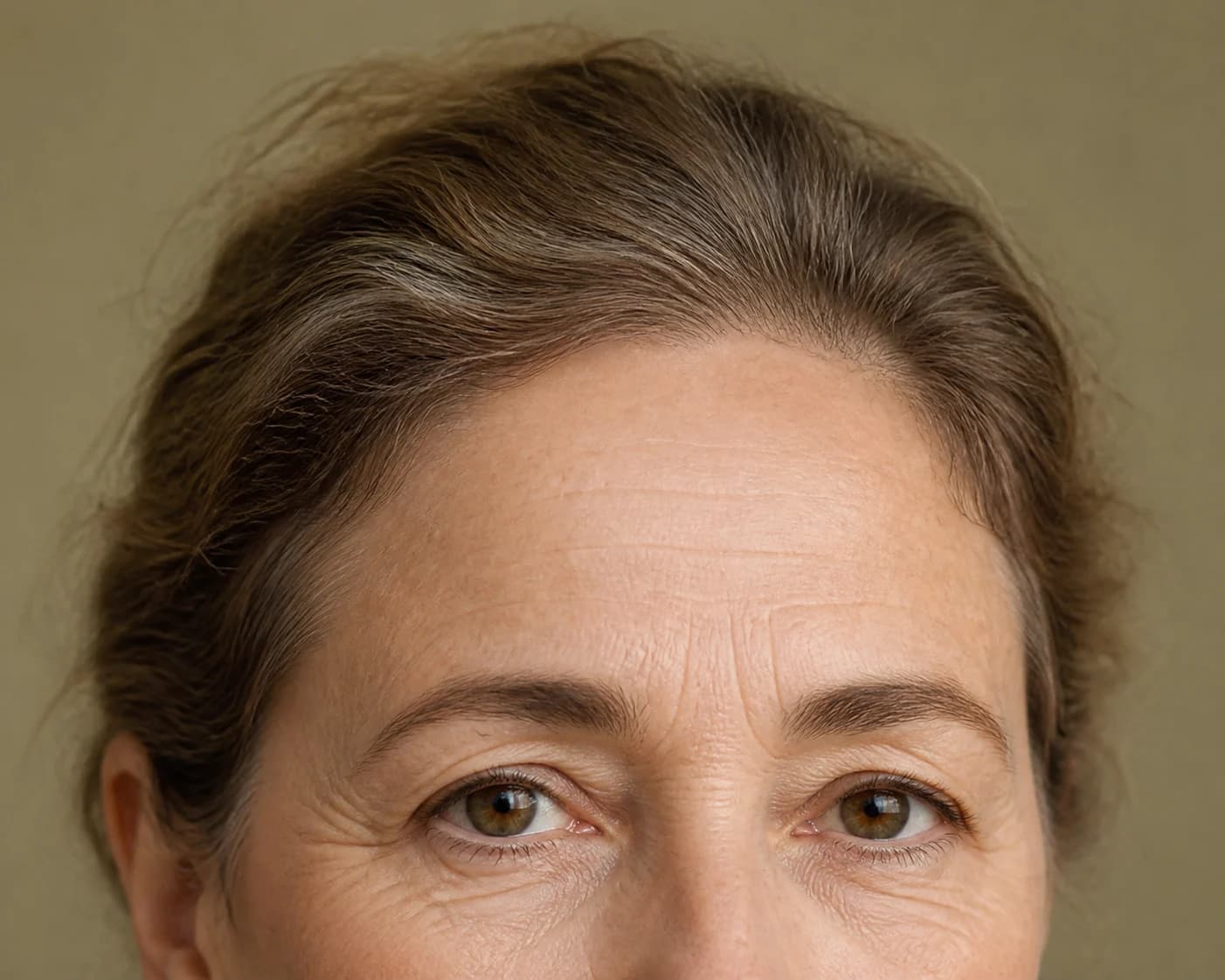
Brow drooping is a general expression describing a brow position that appears lower on the face; it is not, by itself, the name of a specific disease or diagnosis. This appearance may be part of a person's natural facial anatomy or become more noticeable as forehead and upper facial tissues change over time.
Brow position may be influenced by forehead and temple tissues, the relationship between the inner, middle and outer brow, and overall facial proportions. Because these factors do not change in the same way in everyone, brows do not have to appear lower at the same age or in the same distribution in two people.
Brow position can also affect the amount of tissue visible on the upper eyelid and the general expression of the eye area. However, a lower-looking brow and changes in upper eyelid skin or soft tissues are not the same anatomical condition. Assessment examines the relationship between these neighbouring regions while recognising them as separate structures.
What Does Brow Drooping Mean?
In everyday language, brow drooping may describe a brow position perceived as lower within the upper face. This expression does not necessarily mean that the brow has moved over time or that there is a single anatomical problem. Some people naturally have a lower brow position; others may notice that the area between brow and upper eyelid looks different over time.
The brow is not a single straight line. The inner part near the bridge of the nose, middle part above the eye and outer or lateral part extending towards the temple each have their own shape and position. They do not have to be at the same height or show the same pattern of change over time. For example, change in the outer part may be more noticeable in one person, while another person's overall brow position may appear more balanced but lower.
Brow position can also be perceived differently with facial expression, forehead movement, camera angle and lighting. Rather than drawing a fixed conclusion from one photograph, assessment considers the brow at rest and its relationship with surrounding tissues. The aim is not to define an ideal brow height or beauty standard, but to understand the appearance a person has noticed within their upper facial anatomy.
Why Can Brow Position Change with Age?
The brow's appearance on the face results from the combined relationship of tissues between the forehead and upper eyelid. Ageing can bring changes in skin and soft tissue characteristics, the way tissues relate to one another and the upper facial contour. The visible result may not be explained by a single structure moving in one direction; original anatomy and the regional distribution of changes together shape the appearance.
Forehead and Upper Facial Tissues
The forehead is the broad upper facial area between the hairline and brows. The elasticity, thickness and relationships of its skin and soft tissues with surrounding structures may change over time. Forehead lines, tissue position at rest and the appearance of the area above the brows are perceived together, so change is not limited to the boundary where brow hairs lie.
This process does not develop in the same way in everyone. Forehead height, skin characteristics, facial expression habits and original brow position vary individually. Although the brow may appear lower with age, there is no single rule that begins at a particular age and progresses in the same direction in everyone. Clinical assessment focuses on understanding the overall upper facial appearance before considering details of surgical layers.
Inner and Outer Parts of the Brow
The inner, middle and outer parts of the brow do not have the same surrounding anatomy. The inner part has a closer visual relationship with the forehead and bridge of the nose, while the outer part relates more closely to the outer upper orbital rim and temple. All parts of the brow may therefore not change by the same amount or in the same way over time.
Some people may first notice that the outer brow appears lower or flatter. In others, the position of the inner and middle parts may have more influence on overall appearance. It is not correct to say that the outer brow always changes first; the noticeable area depends on natural brow shape, upper facial proportions and the distribution of surrounding tissues.
Relationship with the Temple Area
The outer brow forms a continuous contour with the temple and side of the upper face. The appearance of skin and soft tissues in the temple can make the transition around the outer brow look more open, flatter or heavier. This relationship is one reason why the outer brow is not assessed solely within its own boundaries.
The relationship between temple and brow does not need to be associated with a particular aesthetic trend or procedure name. Assessment examines the forehead, temple, brow and upper eyelid as related areas, while still recognising each region's separate anatomical characteristics.
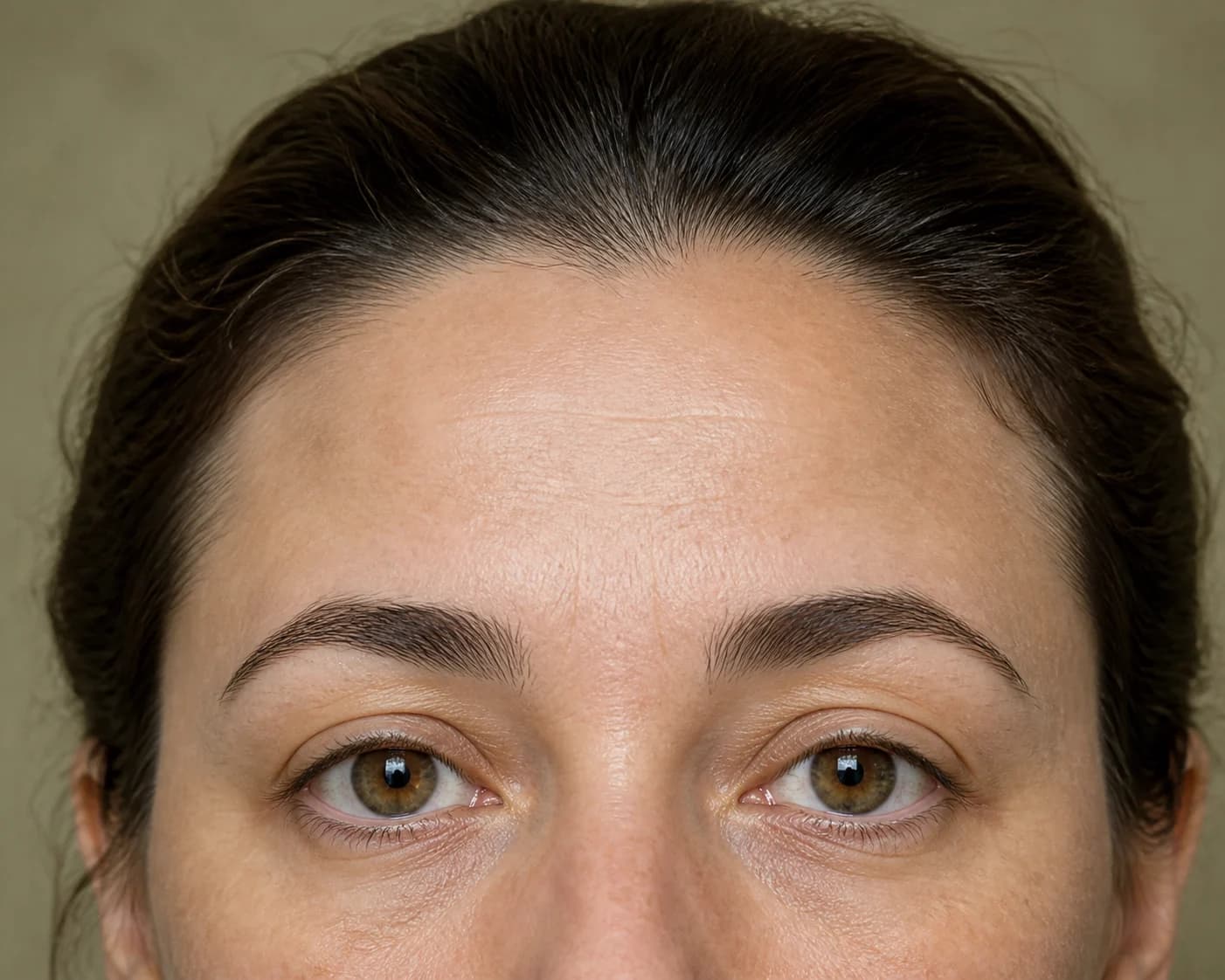
Are Brow Drooping and Upper Eyelid Sagging the Same?
No. Although adjacent, the brow and upper eyelid are anatomically different structures. The brow occupies a position related to the forehead and upper facial tissues. The upper eyelid is a mobile structure covering the eye, with its own skin and soft tissues. A lower-looking brow is not the same as a change in upper eyelid skin or tissues.
Nevertheless, the two regions can affect each other visually. When the brow is lower, the space between brow and eyelid crease may appear narrower and more tissue may seem visible on the upper eyelid. Conversely, upper eyelid tissues may change while brow position is maintained. Because upper eyelid appearance can relate to different anatomical causes, distinguishing them requires clinical assessment; separate clinical conditions involving true eyelid ptosis are not addressed in this article.
The article The Difference Between Brow Lift and Upper Eyelid Surgery provides further context about how the surgical scopes of the two regions differ. Assessment of the upper eyelid's own anatomy is covered on the Upper Eyelid Surgery page. These links do not mean that both areas require a combined procedure.
How Can Brow Position Affect Upper Eyelid Appearance?
Brow position forms one boundary of the area visible on the upper eyelid. Changes in the distance between brow and eyelid crease and the appearance of tissues in this area may alter the perceived expression of the eye area. Brow movement during forehead activity can also contribute to differences in upper eyelid appearance between rest and expression.
This visual relationship can lead to a brow-related change being interpreted as an upper eyelid change, or vice versa. However, changing brow position does not resolve every upper eyelid condition. Equally, focusing only on eyelid tissues may not explain the contribution of the brow–forehead relationship to appearance.
The framework for surgical assessment of the upper face is explained on the Brow Lift Surgery page. Because brow and eyelid are separate structures, assessment aims to distinguish their contributions to the shared appearance, rather than treating one as an automatic solution for the other.
Does Brow Drooping Look the Same in Everyone?
No. Natural brow shape, resting brow position, forehead height, the structures around the eye socket and temple contour vary between people. These original differences may cause a similar degree of brow position change to look different on two faces. People of the same age are not expected to have identical brow and upper eye area appearances.
The distribution of change may also differ. The outer part and its transition to the temple may be more noticeable in one person, while the space between the middle brow and upper eyelid may be more prominent in another. Small natural differences between the brows can also exist; it is not appropriate to assess them against a single ideal shape.
Because camera angle, facial expression and temporary forehead muscle activity can influence appearance, one image does not show individual anatomy in full. Assessment examines the brow at rest, its changes with movement and its relationship with surrounding tissues together. The aim is not comparison with others, but understanding which region influences appearance within the individual's upper facial structure.
Can Genetics and Facial Anatomy Affect Brow Position?
Yes, natural brow shape and position may relate to structural characteristics. Forehead height and shape, the bony contour around the eye socket, the space between brow and upper eyelid, and temple appearance make up the original upper facial anatomy. Similar brow shapes or upper facial proportions among family members illustrate the contribution of genetic characteristics to this framework.
Genetic similarity does not mean that the brow will necessarily descend at a particular age or that everyone will develop the same pattern of change. Skin characteristics, tissue changes over time and environmental factors may contribute alongside natural anatomy. Even within one family, the appearance of the inner and outer brow or the brow–eyelid relationship may differ.
Assessment therefore does not use general beauty ratios or a fixed ideal brow height. A person's natural brow line, its balance with the forehead and eye area, and the changes noticed over time are considered together. A naturally lower brow is not interpreted, on its own, as a condition requiring treatment.
How Is Brow Drooping Assessed?
Assessment may examine the current resting brow position, the relationship between its inner, middle and outer parts, and how it changes with movement. Forehead height and tissue appearance, the temple area, the space between brow and upper eyelid, and natural differences between the sides form part of this examination. The aim is to understand not just how low the brow appears, but which anatomical relationships give rise to that appearance.
When the person noticed the change, previous procedures, general health and expectations contribute to the assessment. The area to be addressed surgically is not determined from one photograph, age or a single point on the brow. Distinguishing resting appearance from appearance during expression also helps avoid unnecessary generalisations.
The general scope of surgical assessment for the brow and forehead is covered on the Brow Lift Surgery page. For the separate framework of a particular approach, see Endoscopic Brow Lift page.
The tissues visible on the upper eyelid are assessed separately. To examine brow position and eyelid anatomy without confusing them, the Upper Eyelid Surgery page explains the relevant surgical area. Examination findings and individual anatomical characteristics determine which region needs assessment; these links are not procedure recommendations.
Brow drooping and anatomical changes in the upper eyelid are not the same condition, although the appearance of the two regions may be related.
This content provides general information and does not replace individual medical assessment.