ENDOSCOPIC UPPER FACIAL SURGERY
Endoscopic Brow Lift
Endoscopic brow lift is one of the techniques using optical visualisation and surgical access in brow and upper facial surgery. Planning examines the relationships between the brows, forehead, temples and upper eyelids together.
- Approach
- Endoscopic visualisation
- Assessment
- Brow and upper facial anatomy
- Related area
- Forehead, temples and upper eyelids
01 / ENDOSCOPIC BROW LIFT
What Is an Endoscopic Brow Lift?
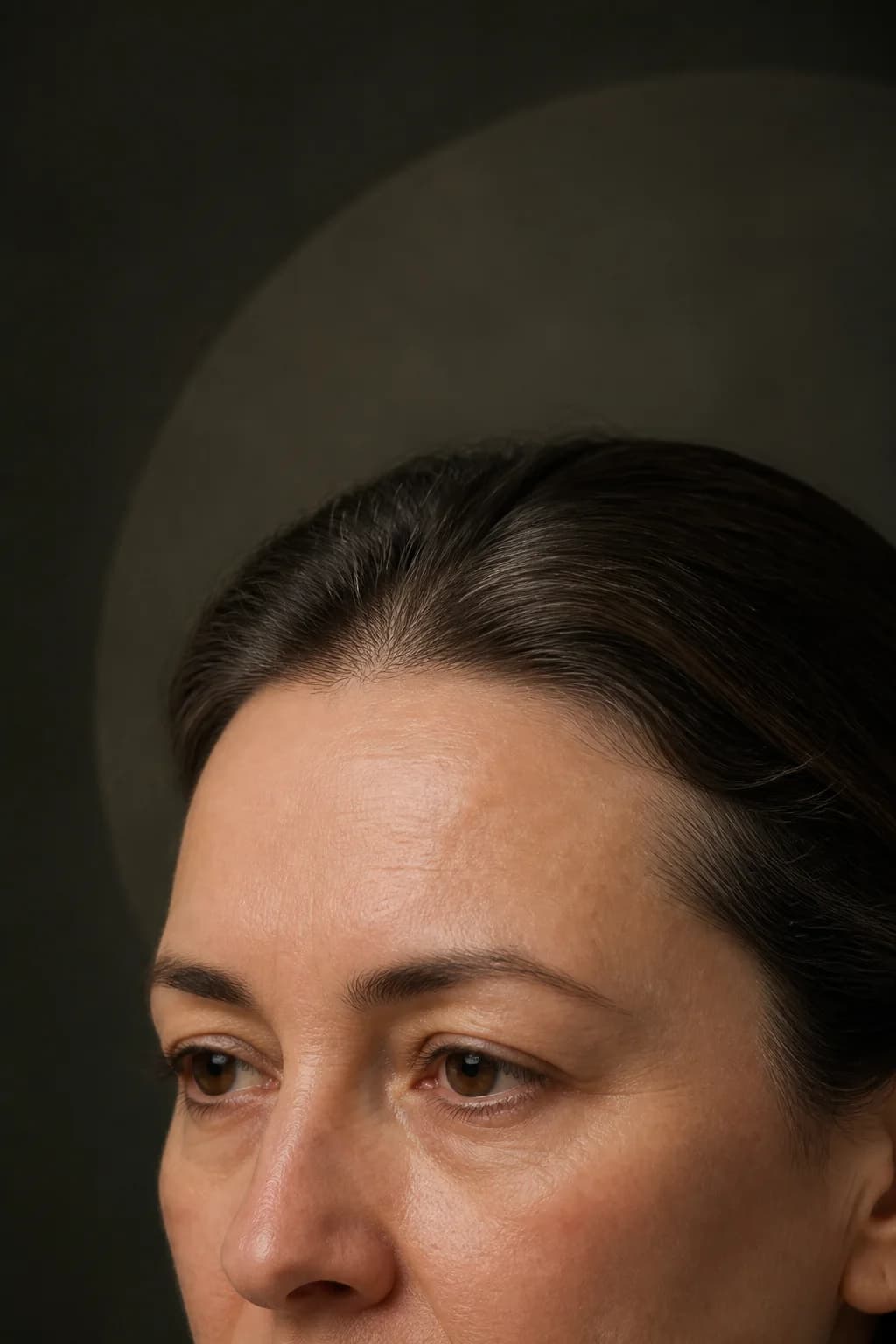
Endoscopic brow lift is a specific surgical approach used in the surgical assessment of the brows and upper face. 'Endoscopic' refers to optical visualisation of the surgical field and the way it is accessed.
Assessment is not limited to the brow line. The brow's current position and different parts are considered within their reciprocal anatomical relationships with the forehead, temples, surrounding upper facial tissues and upper eyelids.
Assoc. Prof. Mehti Şalvız states that he always uses an endoscope in his own brow lift practice. Brow position, its relationship with the upper eyelid and the person's expectations are assessment considerations that determine the possible scope of this approach.
02 / ENDOSCOPIC APPROACH
What does an endoscopic approach mean?
An endoscope is a system that helps provide an optical view of the surgical field. In this context, 'endoscopic approach' defines the visualisation and access method, while 'brow lift' defines the anatomical area assessed and the surgical aim.
These two terms answer different questions: one concerns how the surgical field is viewed and accessed, and the other concerns the anatomical relationships through which the brows and upper face are addressed.
The doctor uses the endoscope to view and identify anatomical structures while releasing tissues. This choice of visualisation does not mean that surgery is risk-free or provides a particular duration of results.
03 / UPPER FACIAL ANATOMY
Why Is Upper Facial Anatomy Important in Endoscopic Brow Lift?
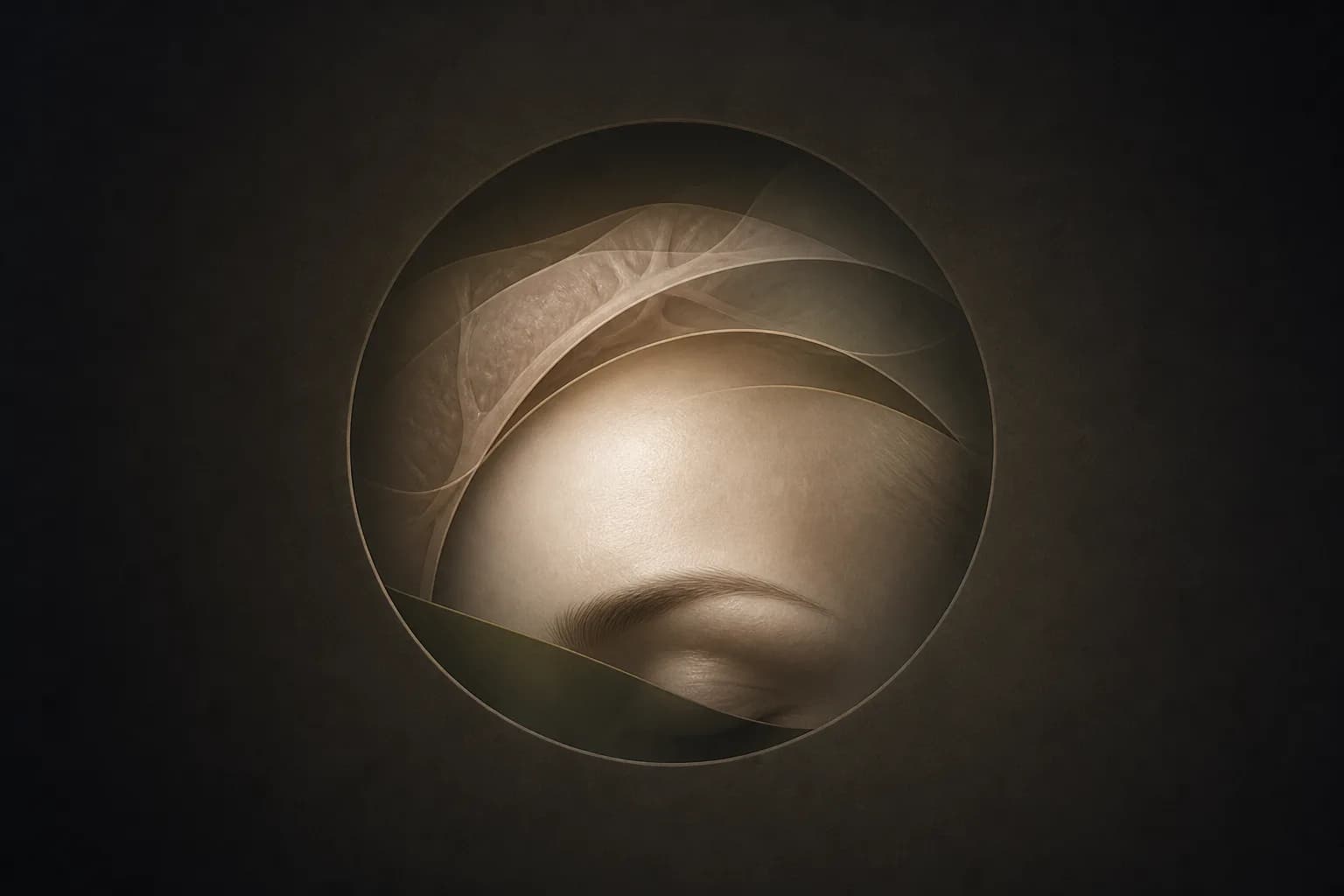
The brow is not examined as a single straight line or point. Its inner, middle and outer parts have different visual relationships with the forehead, temples and surrounding upper facial tissues. These parts and the two sides of the face may not share the same pattern.
The relationship of forehead tissues with the brow line, and of the outer brow with the temple, explains different parts of the upper face's appearance. Planning follows this anatomical continuity rather than being reduced to brow height.
Brow position may affect the visible upper eyelid area, but the brow and upper eyelid are not the same anatomical structure. Upper eyelid findings are explained as a separate surgical area on the Upper Eyelid Surgery page.
Brow Position
Forehead Area
Temple Area
Upper Eyelid Relationship
04 / SURGICAL ASSESSMENT
How Is Endoscopic Brow Lift Assessed?
Assessment is not reduced to whether the brow looks low or high. Because the inner, middle and outer parts may have different patterns at rest and during facial expression, brow position is examined together with forehead and temple tissues, surrounding upper facial structures and both sides of the face.
The extent to which the visible upper eyelid area relates to brow position, previous procedures, general health information and expectations are considered within the same assessment. The role of the endoscopic approach in the surgical plan is also determined through these anatomical relationships and examination findings.
The surgeon assesses brow drooping, associated upper eyelid hooding, folds at the corner of the eye and brow asymmetry. Difficulty closing the eyes after previous upper eyelid surgery, a long, curved forehead or concerns about increasing forehead height may limit the procedure. Medical suitability and realistic expectations are assessed separately.
Brow Position
Forehead Anatomy
Temple Area
Upper Eyelid Relationship
Previous procedures
General health
05 / SURGICAL APPROACHES
How the Endoscopic Approach Relates to Other Brow Lift Methods
Brow lift surgery includes different approaches to access and planning; the endoscopic approach is one of them. The general surgical framework is explained on the Brow Lift page, while optical imaging and access are explained here.
The existence of different brow lift methods does not mean that the surgeon performs all of them. His own preference is endoscopic access; its appropriate scope is determined through an individual examination.
Brow Lift Surgery
Brow lift surgery is a broad surgical category in which brow position and upper facial tissues may be assessed using different methods. The choice of method is not based on a single appearance or the name of a technique.
Endoscopic approach
The endoscopic approach is one of the options within this surgical category that describes the method of imaging and access. Its suitability is assessed according to individual anatomy and the scope of the plan.
06 / SURGICAL PROCESS
Before an Endoscopic Brow Lift and During Surgery
Preoperative assessment
General health, medications, previous upper facial or eye area procedures and expectations are discussed before surgery. The current brow position, forehead and temple tissues, and their relationship with the upper eyelid shape the surgical scope.
Preparation for endoscopic upper facial surgery is arranged according to health information and the planned approach. The surgeon's individual instructions apply to medications and other matters before surgery.
Surgical process
Surgery follows the anatomical plan; endoscopic imaging helps assess the surgical area. Access and the tissues to be included are determined according to upper facial anatomy.
In the surgeon's practice, the procedure takes place in an operating theatre under general anaesthesia and lasts approximately 1–2 hours. An overnight stay is usually planned, although same-day discharge is possible for some patients. The time needed for any combined procedures is assessed separately.
Access is through the hair-bearing temple area; when necessary, an additional incision of approximately 1 cm may be used along the forehead hairline. The surgeon states that he uses absorbable sutures, a bandage for two days and, in some patients, a drain that remains overnight.
- Assessment
- Planning
- Procedure
- Follow-up
07 / RECOVERY AND FOLLOW-UP
After an Endoscopic Brow Lift
Recovery process
Swelling, oedema or bruising may occur around the forehead and eyes in the early period. Their course is related to the scope of surgery and the tissues' biological response.
The surgeon generally anticipates a return to everyday life after approximately one week. Follow-up appointments are planned at week 1, month 1 and month 3 or 4. The timing of activities such as exercise and driving is assessed separately.
Brow surgery can involve bleeding, infection, wound and scar problems, hair loss, altered sensation or nerve problems affecting facial movement. Do not automatically consider new loss of movement or altered sensation normal; inform the surgical team.[1]
Duration of results
An endoscopic brow lift does not stop natural ageing. Later appearance is influenced by the combined changes in the forehead, brow and upper facial tissues over time.
An exact duration of results cannot be given because of anatomy, tissue characteristics, genetic factors and lifestyle habits. Results are assessed within the upper face as a whole, rather than by the position of a single point on the brow.
The surgeon uses approximately 3–4 months as the timeframe for assessing results. This assessment interval is not a specific success rate or a guarantee of lasting results.
08 / FREQUENTLY ASKED QUESTIONS
Frequently Asked Questions About Endoscopic Brow Lift
What is an endoscopic brow lift?
An endoscopic brow lift is one of the methods used in upper facial surgery that involves optical imaging and surgical access. The plan is determined according to brow position and upper facial anatomy.
What does an endoscope do?
An endoscope is an optical system that helps visualise the surgical area. In upper facial surgery, it can be used to view particular anatomical regions and guide the access plan.
Is an endoscopic brow lift the same as brow lift surgery?
An endoscopic brow lift is one of the methods within the broader category of brow lift surgery. The term ‘endoscopic’ describes the imaging and access approach within this category.
Who may be assessed for an endoscopic brow lift?
Brow position, forehead and temple anatomy, the relationship with the upper eyelid and general health are examined together. The suitability of the method is determined through an individual examination.
Is an endoscopic brow lift the same procedure as upper eyelid surgery?
No. An endoscopic brow lift addresses the upper face and brow area, while upper eyelid surgery addresses eyelid tissues. Although the brow–eyelid relationship is examined during assessment, their surgical scopes are separate.
Is an endoscopic brow lift the same as cat eye surgery?
No. An endoscopic brow lift addresses brow and upper facial anatomy. ‘Cat eye’ or ‘fox eye’ is a different aesthetic concept describing the outer corner of the eye and the appearance of the lateral upper face.
Is recovery after an endoscopic brow lift the same for everyone?
Recovery varies between individuals. The surgeon generally anticipates a return to everyday life after approximately one week; permission to exercise or drive is assessed separately. Follow-up appointments are planned at week 1, month 1 and month 3 or 4.
Are endoscopic brow lift results permanent?
An endoscopic brow lift does not stop natural ageing. Later appearance is related to anatomy, tissue characteristics, genetic factors and lifestyle habits; an exact duration of results cannot be given.
Sources
These sources provide general information; they are not evidence of an individual procedure or outcome.
- American Society of Plastic Surgeons. Brow Lift Risks and Safety
Accessed on 6 September 2026. Used for the general risk framework.
Contact
Contact the clinic for current appointment and consultation information.
Contact details