FACIAL REJUVENATION SURGERY
Facelift Surgery
Facelift surgery is one approach to facial rejuvenation that addresses age-related changes in the midface, lower face, jawline and, where needed, the transition to the neck together. The surgical scope is planned according to facial anatomy and tissue characteristics.
- Region
- Midface and lower face
- Assessment
- Facial anatomy and tissue structures
- Related area
- Neck and jawline

01 / FACELIFT
What is facelift surgery?
A facelift aims to reposition facial tissues that have loosened with age and reduce sagging in the lower face. Changes assessed include downward movement of the cheeks, more pronounced folds running from the sides of the nose to the corners of the mouth, and sagging along the jawline. Assessment considers the midface and cheeks, lower face, jawline and, where needed, the transition to the neck together.[1]
The distinction between the surgical plane and endoscopic visualisation is explained on the deep plane approach page.
02 / FACIAL AGEING
What changes can occur as the face ages?
The position of sagging tissues, lost volume and fine lines on the skin surface are different concerns. A facelift does not address all sun damage, pigmentation and fine surface wrinkles. Brow descent and excess eyelid skin are also assessed separately. Considering an additional approach for volume loss or the skin surface does not mean that it is needed in every operation.[1][8]

Midface and cheeks
The position of midfacial tissues and distribution of volume affect the appearance of the cheeks.
Lower face and jawline
Lower facial soft tissues are directly related to jawline definition.
Face–neck transition
The transition between the jawline and neck continues the contour of the lower face.
03 / SURGICAL ASSESSMENT
How is facelift surgery planned?
The consultation considers the appearance you wish to change, your expectations of surgery and findings in the face and neck together. General health, previous operations, medications and supplements, allergies and smoking are recorded. Facial examination and photographs help with discussing options and the expected outcome. This information is needed not only to choose a method, but also to assess surgical risks and preparation.[2]
Health problems that affect healing and unrealistic expectations are important in decision-making. Smoking is also assessed in relation to surgical preparation and healing. Facial sagging alone does not establish suitability for surgery without addressing these factors.[7]
Assoc. Prof. Mehti Şalvız’s assessment focuses on facial sagging, more pronounced folds between the nose and mouth and at the corners of the mouth, and tissue accumulation along the jawline. Age alone is not a decision criterion. Uncontrolled systemic disease and unrealistic expectations are among the reasons he considers surgery unsuitable or postpones it.

Facial anatomy
Tissue characteristics
Midface and lower face
Jawline
Neck region
Previous procedures
General health
Age alone does not determine surgical planning.
04 / SURGICAL APPROACHES
Different approaches to facelift surgery
SMAS is the name of an anatomical structure; several surgical techniques address it. For example, SMAS plication and approaches that mobilise tissues from a deeper plane are not the same procedure. Deep plane techniques also address tissues associated with the SMAS.[10]
The doctor uses a deep plane approach when general sagging of the face, jawline and neck requires an incision in front of the ear. He considers an endoscopic deep plane approach when there is no marked sagging of the jawline or neck, the main focus is the midface and substantial skin removal is unnecessary. He states that he does not perform SMAS excision, plication or mini facelifts in his practice.
05 / FACE AND NECK
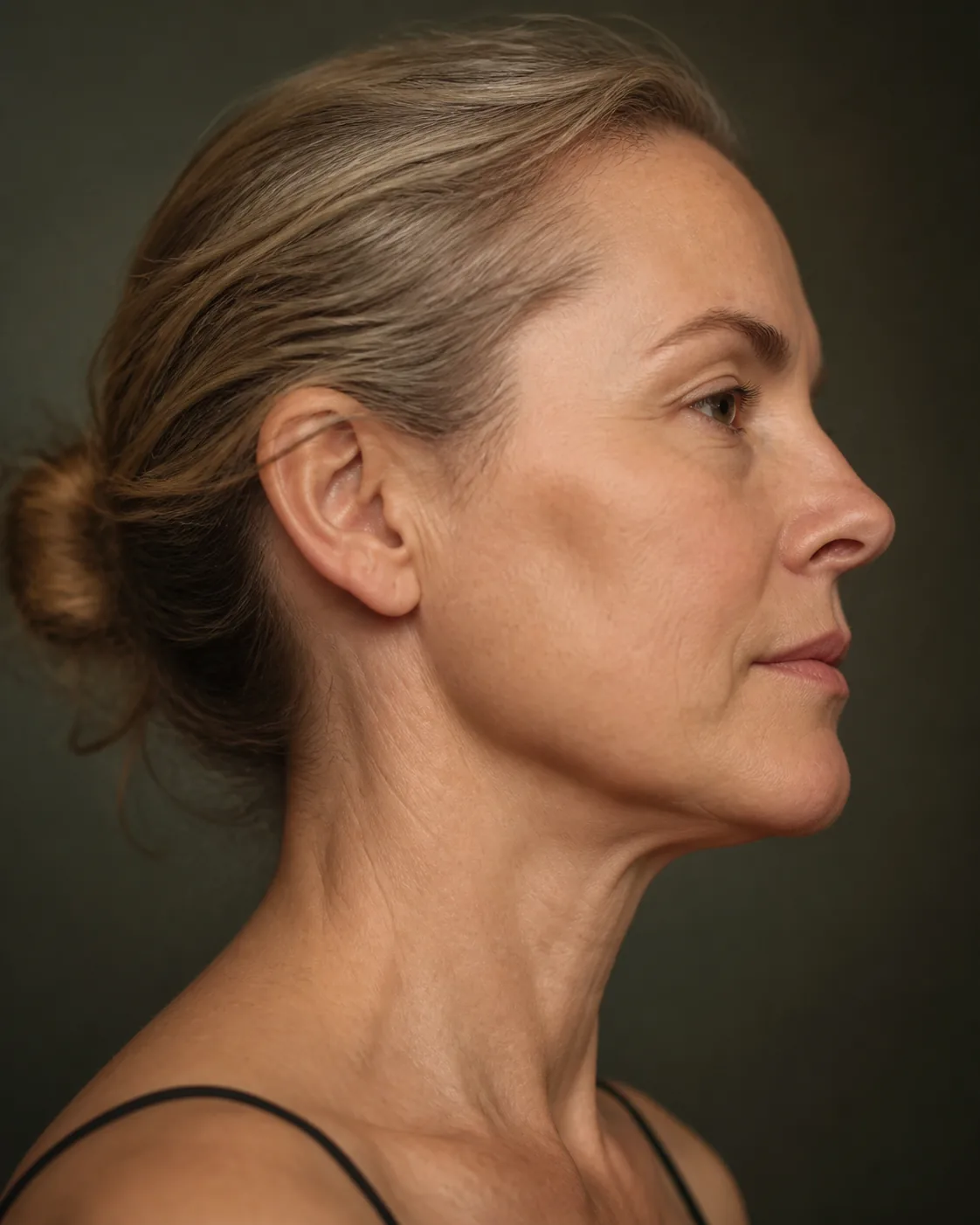
How are the face and neck assessed together?
Facelift and neck lift surgery may be performed together, but their scope differs. Assessment considers whether findings affecting the jawline originate in lower facial tissues or neck laxity. Some plans address the face, some the neck, and some both. The scope of neck surgery is explained separately on the Neck Lift Surgery page.[8]
In this practice, the neck is usually included when facial sagging contributes to its appearance. The doctor does not operate on the neck in surgery directed only at the midface.
06 / SURGICAL PROCESS
Before facelift surgery and the surgical process
Preoperative assessment
Preparation may include medical assessment and tests where needed. Changes relating to medications, supplements and smoking are planned with the surgical team. Returning home and support after surgery should also be discussed beforehand; these details cannot be determined solely from the name of the surgical technique.[3]
Surgical process
Depending on the chosen approach, surgery addresses the skin and underlying soft tissues. Supporting tissues may be repositioned; the skin is adapted to the new contour and excess is removed. Healing is monitored after the incisions are closed. This general sequence does not mean that the same tissue layers or facial regions are treated in every patient.[8]
General facelift resources describe general anaesthesia and local anaesthesia with sedation as different options. Anaesthetic assessment considers the scope of the planned operation and the individual’s health.[9][2]
The doctor performs facelift surgery in an operating theatre under general anaesthesia, usually taking three to four hours. The patient generally stays in hospital for one night. These are approximate planning details; additional procedures and individual circumstances can change the duration or hospital stay.
Where are the incisions?
Different incision patterns are used in facelift surgery. In a traditional approach, the incision may start around the hairline at the temple, continue around the ear and extend into the hair-bearing area behind it. More limited incision options also exist. An additional incision beneath the chin may be needed depending on the neck procedure. The pattern to be used should be explained alongside the planned surgical scope.[4]
The doctor describes his standard incision as starting at the sideburn level and extending from the front of the ear to behind it. When a plan requires treatment of deep neck fat or the submandibular salivary gland, he states that he uses an additional skin incision of approximately 2 cm; its location is explained in the individual surgical plan.
- Assessment
- Surgical planning
- Procedure
- Follow-up
RISKS AND LIMITATIONS
Risks and limitations
Bleeding, infection, wound-healing problems and skin loss are possible risks of facelift surgery. Changes in sensation, nerve involvement that can cause weakness of facial movement, asymmetry and unwanted scars should also be discussed. General surgical risks, including anaesthetic problems and blood clots in veins, are assessed separately. The result may not meet expectations. This general outline does not replace the consent discussion about your risks and how potential problems would be managed.[5]
07 / RECOVERY
Recovery after facelift surgery
Early recovery
Some plans use dressings or drains to remove accumulated fluid.[6]
In the doctor’s practice, a dressing is used for the first four days. Mild or occasionally moderate pain and nausea may occur on the first night. The medical team manages pain control and early follow-up.
Oedema, swelling and bruising
Swelling and bruising may occur after surgery; the initial appearance does not show the full result.[4]
The doctor states that swelling is often more noticeable on days three and four, and bruising may also occur. Early swelling and tightness can be misleading; changes over several months are followed when assessing the result.
Returning to daily life
Individual instructions are needed for incision care, medication and returning to daily activities.[6]
General aspects of healing are discussed in the Recovery After Facelift Surgery guide.
The doctor’s commonly given approximate intervals are two weeks for returning to work and makeup, three to four weeks for light exercise and eight to twelve weeks for strenuous exercise. He anticipates approximately one month for most other social activities. The start of each activity is confirmed according to individual healing and follow-up findings.
Incision care and scar follow-up
Surgical incisions leave scars. Natural transitions around the hairline and ears may help make them less noticeable; they do not guarantee scar-free surgery. Scars can change over time and should not be expected to disappear completely. Prominent or unwanted scarring is among the possibilities to discuss before surgery.[9][4]
The doctor uses absorbable sutures. He prefers to remove them in patients who can attend a check around day ten; for those who cannot, he expects the sutures that do not require removal to dissolve in approximately three weeks. Sutures and incision sites are monitored through an individual follow-up plan.
- Early recovery
- Progress of recovery
- Checks and follow-up
- Tissue adaptation
08 / DURATION OF RESULTS
How facelift results change over time
Duration of results and the ageing process
A facelift does not stop ageing; results cannot be promised to remain unchanged for life.[1]
The doctor uses approximately three months to assess the early result and approximately one year to assess the final appearance. These follow-up intervals do not guarantee a particular outcome or its duration.
Frequently asked questions
Who may be assessed for facelift surgery?
Assessment considers changes in the midface and lower face, the jawline, transition to the neck, tissue characteristics, general health and expectations together. The appropriate surgical approach is determined by examination findings.
Is there a specific age limit for facelift surgery?
There is no limit based solely on chronological age. The distribution of anatomical changes, tissue characteristics and general health are considered alongside age.
What is a deep plane facelift?
A deep plane facelift is one approach in which surgical work is planned at a deeper anatomical level. The details of this approach to the supporting facial tissues are explained on a separate page.
Can facelift and neck lift surgery be planned together?
The doctor usually addresses the two regions together when facial sagging contributes to the appearance of the neck. He does not operate on the neck when the surgical plan is limited to the midface. Examination findings determine the scope.
Is recovery after facelift surgery the same for everyone?
No. Surgical scope, the method used and the biological response of tissues affect recovery. Swelling, oedema, bruising and tissue healing are monitored at follow-up consultations.
Does facelift surgery leave scars?
Facelift surgery involves surgical incisions. Their location and extent are planned according to the method, and scar healing is monitored alongside skin and tissue characteristics.
Are facelift results permanent?
A facelift does not stop ageing. The appearance of results over time relates to anatomy, genetics, skin and tissue characteristics, lifestyle and the surgical plan; a specific duration cannot be guaranteed.
Can a facelift be considered alongside other facial rejuvenation procedures?
The doctor may consider eyelid, brow and neck procedures alongside a facelift according to need and medical suitability. He prefers not to perform rhinoplasty and deep plane facelift surgery in the same session because this extends operating and recovery time.
Sources
These sources provide general information; they are not evidence of an individual procedure or outcome.
- American Society of Plastic Surgeons. Facelift Surgery
- American Society of Plastic Surgeons. Facelift Consultation
- American Society of Plastic Surgeons. Facelift Preparation
- American Society of Plastic Surgeons. Facelift Procedure Steps
- American Society of Plastic Surgeons. Facelift Risks and Safety
- American Society of Plastic Surgeons. Facelift Recovery
- American Society of Plastic Surgeons. Facelift Candidates
- BAAPS / BAPRAS. Facelift and Necklift
- NHS. Facelift (rhytidectomy) — 2023 (last reviewed)
- Hatan Mortada et al.. Evolution of Superficial Muscular Aponeurotic System Facelift Techniques: A Comprehensive Systematic Review of Complications and Outcomes — 2023 (online publication); 2024 (issue)
Contact
Contact the clinic for current appointment and consultation information.
Contact details