FACIAL REJUVENATION SURGERY
Neck Lift Surgery
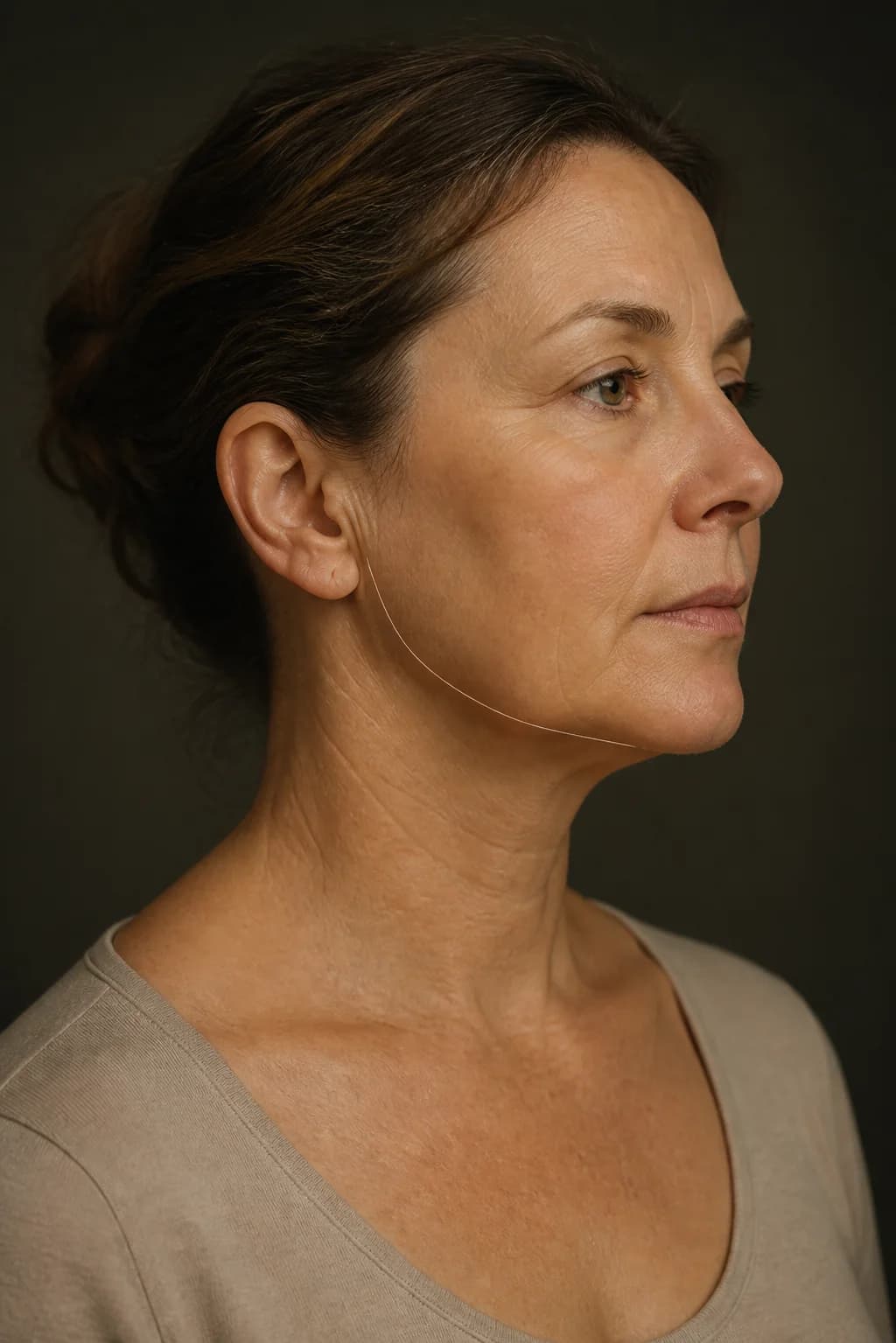
Neck lift surgery is one of the facial rejuvenation approaches addressing age-related changes beneath the chin, along the jawline and in neck contour. Planning is based on the anatomical transition between neck tissues and the lower face.
- Region
- Neck and jawline
- Assessment
- Neck anatomy and soft tissues
- Related area
- Lower face and jawline
01 / NECK LIFT
What does neck lift surgery aim to achieve?
A neck lift aims to reduce the loose appearance beneath the chin and in the neck, and to define the transition between the jawline and neck. Loose skin, fat beneath the chin and muscle-related banding are issues that may be addressed. Not all these concerns are present in every individual.[1]
02 / NECK AGEING
How are skin, tissues beneath the chin and muscle distinguished?
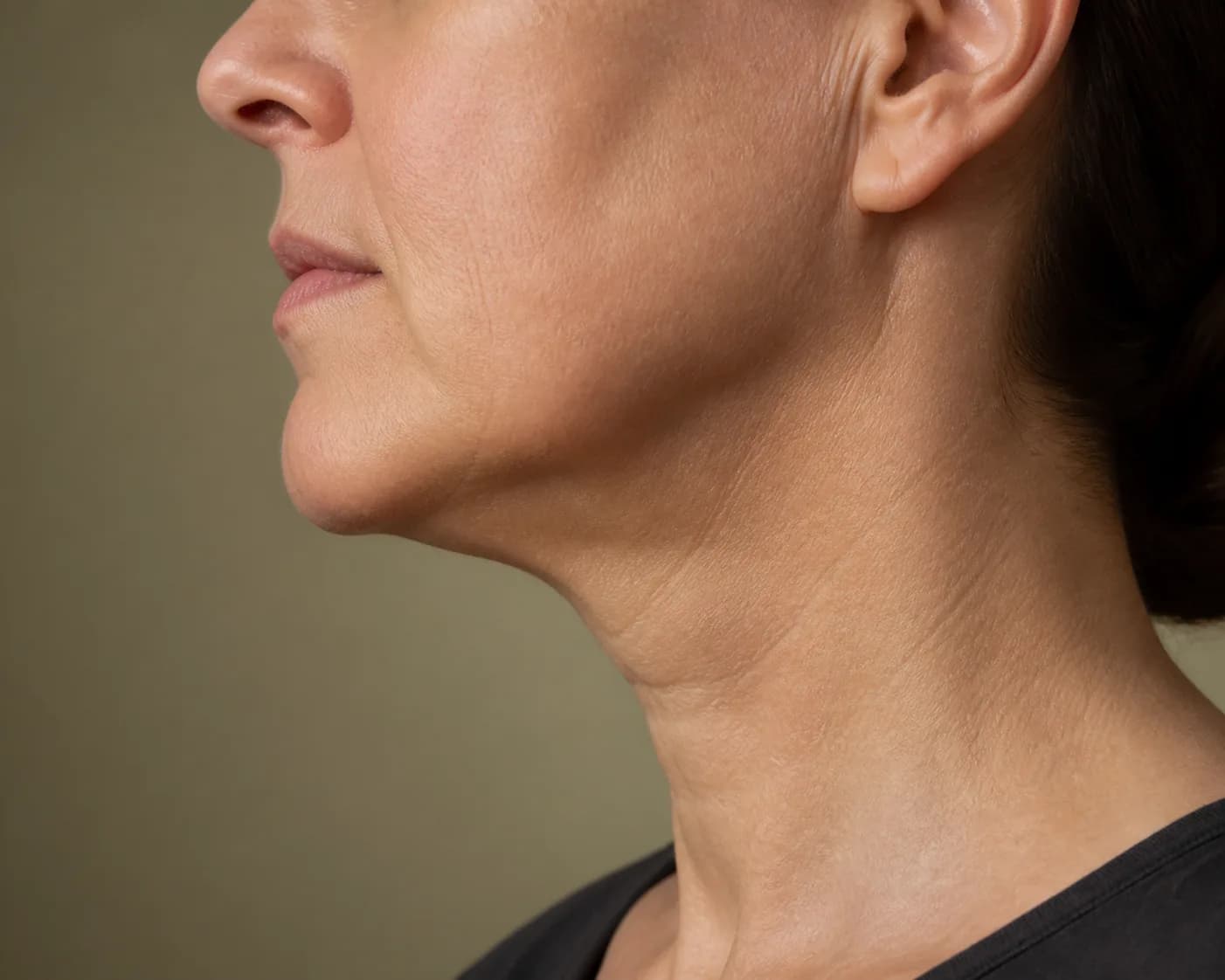
Excess skin, fat accumulation and muscle-related appearance are assessed separately. The platysma is a thin muscle near the surface of the neck, extending between the collarbones and lower face. Laxity in this muscle can affect the appearance of the neck; a procedure addressing the muscle may be planned as part of a neck lift.[8]
Removing fat beneath the chin can reduce fullness caused by fat, but does not correct every structural issue contributing to the appearance of the neck. Skin elasticity and excess skin therefore matter. An appearance described as a “double chin” does not establish that fat removal alone will be sufficient.[7]
Skin and tissue characteristics
Jawline
The area beneath the chin
Face–neck transition
03 / ANATOMICAL ASSESSMENT
What matters in the assessment before surgery?
The consultation covers the appearance you would like to change, health conditions, previous operations, allergies, medicines and supplements, and smoking. Examination of the face and neck, with measurements and photographs when needed, helps explain the options and expected changes. Anaesthesia and possible risks are also part of this discussion.[2]
Skin quality and the degree of excess skin can affect how much change can be expected from a limited procedure. Health conditions that could impair healing or increase surgical risk are also assessed. Neck laxity alone does not establish suitability for surgery.[9]
Assoc. Prof. Mehti Şalvız states that he performs isolated neck lifts less often and usually assesses the neck as part of a facelift. A neck-only procedure may be considered when there is pronounced neck fullness, isolated skin and platysma laxity, or banding without facial sagging.
Neck anatomy
Jawline
Skin and soft tissues
Neck muscles
The lower face
04 / LIMITS OF SCOPE
What does a neck lift not automatically correct?
A neck lift does not itself correct brow drooping or excess eyelid skin. Fine surface wrinkles, pigmentation and skin texture are also separate from contour changes. Other options can be discussed for these concerns; not every additional option needs to be included in surgery.[10]
- Anatomical assessment
- Surgical planning
- Procedure
- Follow-up
05 / FACE AND NECK
Is the neck assessed alone or together with the face?
Sagging along the jawline may also originate in lower facial tissues. When changes mainly affect the neck and area beneath the chin, a neck-only approach may be discussed; if the lower cheeks and jawline are also affected, options involving the face may be considered. Examining neighbouring areas does not mean that both operations must be performed together. The facial scope is explained on the Facelift Surgery page.[1][9]
During the consultation, clarify which areas the proposed plan covers and which expectations it will not meet. If both areas are proposed, ask why they would be addressed together or at separate times. The decision cannot be made from the names of the operations alone.[2]
The doctor assesses both areas together when facial sagging contributes to the appearance of the neck. He does not favour an isolated neck procedure that would not support overall facial harmony or would not provide the expected change without a facelift; unrealistic expectations and medical considerations also limit the decision.

06 / SURGICAL PROCESS
Preparation, surgery and incision options
Preparation
Preparation begins with a health assessment and tests if needed. Plan any changes involving medicines, supplements and smoking with the surgical team; do not stop medicines on your own. Find out in advance what to do the evening and morning before surgery, how you will get home and what help you may need at home.[3]
The general surgical process
Depending on the chosen scope, fat and tissues beneath the neck skin may be adjusted, the muscle addressed and excess skin removed. The incisions are then closed. This general sequence does not mean that everyone needs the same tissue layers addressed or the same incision pattern.[4]
Anaesthesia and hospital stay
General neck lift resources describe general anaesthesia or, where appropriate, local anaesthesia with sedation. Sedation involves medicines that support relaxation and a sleepy state.[7]
Discharge arrangements vary with the surgical scope. General sources describe day-case neck procedures separately from face–neck surgery, for which same-day discharge or an overnight stay may be discussed.[3][10]
The doctor performs isolated neck lift surgery in an operating theatre under general anaesthesia. It takes approximately 1–2 hours, with same-day discharge generally planned. These details should not be treated as the total operating time or hospital stay for surgery combined with a facelift.
Incisions and scars
A neck lift may use incisions around the ear and hairline; an additional incision beneath the chin may also be needed. More limited incision options may offer a more limited change. The proposed incision location and reason for that access should be explained together with the tissues to be addressed.[4]
A scar forms as a surgical incision heals. Its colour and prominence can change over time; it should not be expected to become completely invisible. A prominent or undesirable scar can also develop. Discuss how your wound and scar will be monitored, as well as the incision location.[11][5]
The doctor states that, depending on the case, he may use an incision of approximately 2 cm beneath the chin for an isolated neck procedure, and that some plans may also require an incision behind the ear. He uses absorbable sutures for closure.
07 / RISKS
Risks and limitations
Possible risks include bleeding and blood collecting beneath the skin, infection, wound healing problems and skin loss. Changes in sensation, prolonged swelling or pain, asymmetry and nerve effects that can cause lower lip weakness should also be discussed. General surgical risks, such as anaesthetic complications and blood clots in veins, are assessed separately. The outcome may not meet expectations and further surgery may be needed. This summary does not replace the consent discussion about your individual risks and how possible problems would be managed.[5]
08 / RECOVERY AND PROCESS
After surgery
Recovery and assessment of the result
As swelling subsides, the contours of the neck become easier to assess. Appearance is evaluated over time; the initial view is not the complete result. Care, neck movements, daily activities and when to seek help are covered in the Neck Lift Recovery article.[6]
In the doctor’s isolated neck lift practice, bandaging and a compression garment are started during the same period. The bandage is used for four days and the garment for one week. Individual instructions explain how they are to be used. He anticipates approximately 5–7 days before returning to general daily life; permission for specific activities is assessed separately.
The doctor observes that neck swelling can become apparent later and take longer to subside. Particularly when deeper structures are addressed, such as reduction of the submandibular salivary gland, he uses approximately six months as the basis for assessing the appearance.
Does the result change over time?
A neck lift does not stop ageing. The appearance achieved through surgery cannot be guaranteed to remain unchanged for life or to last for a particular period.[1]
09 / FREQUENTLY ASKED QUESTIONS
Frequently asked questions about neck lift surgery
What is neck lift surgery?
Neck lift surgery addresses age-related anatomical changes in the neck and jawline surgically. Its scope is determined by the skin, soft tissues and their relationship with the lower face.
Who may be assessed for neck lift surgery?
The distribution of changes in the neck and jawline, skin and tissue characteristics, general health and anatomical relationships with the lower face are examined together. Surgical planning is based on examination findings.
What causes neck sagging?
Skin laxity, fat beneath the chin and muscle-related changes can contribute to the appearance of the neck. These causes are discussed in What Causes Neck Sagging?
What Causes Neck Sagging?Can facelift and neck lift surgery be performed together?
The doctor assesses both regions together when facial sagging contributes to the appearance of the neck. An isolated neck procedure may be considered separately when findings are concentrated in the neck without facial sagging. Operating time and hospital stay information for an isolated procedure do not represent the total for combined surgery.
Is recovery after a neck lift the same for everyone?
The duration and course of recovery can vary. Care and return to activities are planned according to your instructions; a reduction in swelling alone is not permission to resume every activity.
Does neck lift surgery leave scars?
Yes, a scar forms as a surgical incision heals. Its colour and prominence can change over time; it should not be expected to become completely invisible. Discuss incision locations and individual scar follow-up at the consultation.
Are neck lifting and fat beneath the chin the same issue?
No. Skin laxity, soft tissue characteristics and fat distribution are different anatomical findings. Clinical examination distinguishes which structures contribute to the appearance.
Are the results of a neck lift permanent?
A neck lift does not stop ageing. The appearance achieved through surgery cannot be guaranteed to remain unchanged for life or to last for a particular period.
Sources
These sources provide general information; they are not evidence of an individual procedure or outcome.
- American Society of Plastic Surgeons (ASPS). Neck Lift — Lower Rhytidectomy
Accessed: 6 September 2026. Cosmetic neck lift; relationship with the lower face and jawline.
- American Society of Plastic Surgeons (ASPS). Neck Lift Consultation
Accessed: 6 September 2026. Consultation for cosmetic neck lift surgery.
- American Society of Plastic Surgeons (ASPS). Neck Lift Preparation
Accessed: 6 September 2026. Cosmetic neck lift; US outpatient care context.
- American Society of Plastic Surgeons (ASPS). Neck Lift Procedure Steps
Accessed: 6 September 2026. Cosmetic neck lift; traditional and limited incision options.
- American Society of Plastic Surgeons (ASPS). Neck Lift Risks and Safety
Accessed: 6 September 2026. Cosmetic neck lift; qualitative list of risks.
- American Society of Plastic Surgeons (ASPS). Neck Lift Results
Accessed: 6 September 2026. Cosmetic neck lift; appearance and protection of the incision.
- Mayo Clinic Staff. Neck lift — Date shown on the source page: 2024-10-02
Accessed: 6 September 2026. Cosmetic neck lift; isolated and extended options involving a facelift.
- Cleveland Clinic. Neck Lift (Platysmaplasty) — Last updated: 2022-06-28
Accessed: 6 September 2026. Cosmetic neck lift / platysmaplasty.
- Cleveland Clinic Cosmetic & Plastic Surgery. Neck Lift
Accessed: 6 September 2026. Neck lift; the institution’s different incision approaches and recovery information.
- BAAPS and BAPRAS. Facelift and Necklift
Accessed: 6 September 2026. General patient guide addressing facelift and neck lift together.
- American Academy of Dermatology (AAD). Scars: Overview
Accessed: 6 September 2026. General scar information; not evidence of neck lift-specific outcomes or frequencies.
Contact
Contact the clinic for current appointment and consultation information.
Contact details