FACIAL REJUVENATION SURGERY
Facial Rejuvenation Surgery
Facial rejuvenation surgery is an overarching surgical framework for classifying age-related anatomical changes in the face, neck, eye area and upper face. The areas to be addressed are determined by facial anatomy and examination findings.
- Scope
- Face, neck and eye area
- Assessment
- Anatomical relationships between regions
- Approach
- Individual surgical planning

01 / COMPREHENSIVE ASSESSMENT
What is facial rejuvenation surgery?
Facial rejuvenation surgery is not the name of a single operation. It is an overarching framework that brings together the surgical areas of the face, neck, eye area and upper face.
The midface and lower face, jawline, neck, eyelids, brows and forehead are distinct anatomical regions. However, they form interconnected transitions in the overall facial contour and expression; the position of tissue in one area can also affect the appearance of a neighbouring area.
Examination helps distinguish which anatomical area is responsible for a visible change. Examining several areas does not mean that all of them will be included in the surgical plan.
According to the practice information shared by Assoc. Prof. Mehti Şalvız, decisions are based on anatomical findings and the individual’s expectations rather than age. The face, neck, eyelids and brows are assessed together; areas requiring treatment are included in the plan subject to medical suitability.
02 / FACIAL AGEING
Is facial ageing assessed in just one area?
Age-related facial changes are not confined to the skin surface. The position of soft tissues beneath the skin, the regional distribution of volume and the transitions between adjacent areas also contribute to facial contour.
The forehead and brow position, eye area, midface, jawline and neck do not change at the same rate. This distribution means that different areas may be prominent even in people of the same age; age alone does not define the surgical area.
Brow position relates to the amount of tissue visible at the upper eyelid, while the jawline relates to the transition between the lower face and neck. The contour extending from the midface to the lower face cannot be explained by a single line or tissue layer.
The individual’s priority is the starting point for examination. The boundaries of the surgical area are defined after distinguishing which anatomical structures or neighbouring regions contribute to that appearance.

03 / SURGICAL AREAS
Which areas can be assessed in facial rejuvenation surgery?
The areas considered in facial rejuvenation surgery can be grouped into four main anatomical families: the face, neck, eye area and upper face. This distinction is not intended to separate procedures from one another, but to place each region’s anatomy and its relationships with neighbouring areas in context.
The links below summarise the general role of each surgical area. Technical details, individual suitability and information about the process are available on the relevant treatment pages. Listing a procedure does not mean that everyone needs it or that different procedures will be combined.
FACE
Facelift Surgery
Facelift surgery focuses on tissue relationships in the midface, lower face and jawline.
Explore facelift surgeryNECK
Neck Lift Surgery
Neck lift surgery addresses the area beneath the chin, the jawline and neck contour as an anatomical continuum.
Explore neck lift surgeryEYE AREA
Eyelid Surgery
Eyelid surgery covers the upper and lower eyelids; each is planned separately according to its own anatomy.
Explore eyelid surgery (in Turkish)UPPER FACE
Brow Lift Surgery
Brow lift surgery focuses on the relationship between brow position and the forehead, temples and upper eye area.
Explore brow lift surgery (in Turkish)04 / FACE AND NECK
How are facelift and neck lift surgery assessed together?
The lower face, jawline and neck are separate anatomical areas; the jawline forms a continuous transition between them. The position of lower facial tissues and neck contour therefore influence each other’s appearance.
Facelift surgery focuses on the midface and lower face, while neck lift surgery focuses on the area beneath the chin and the neck. Discussing the two together does not mean that they have the same surgical scope.
In the doctor’s approach, both regions are addressed together when facial sagging also contributes to the appearance of the neck. He does not operate on the neck in a plan limited to the midface. An isolated neck procedure is considered separately when findings are concentrated in the neck without facial sagging.
05 / EYE AREA AND UPPER FACE
How are the eyelids and brows assessed together?
Although the brow, upper eyelid and lower eyelid appear in the same area, they are different anatomical structures. Brow position affects the amount of tissue visible at the upper eyelid, while the lower eyelid relates to the under-eye area and the eyelid–cheek transition.
Eyelid surgery includes the upper and lower eyelids. Upper eyelid surgery focuses on the eyelid crease and upper eyelid tissues; lower eyelid surgery focuses on the lower eyelid and under-eye area.
Brow lift surgery addresses the forehead and brow position; it is not another name for upper eyelid surgery. Examination distinguishes whether the appearance originates from the brow, the eyelid or the relationship between the two.
Eye area
Although the upper and lower eyelids are in the same region, each can be planned separately according to its anatomical characteristics.
Brow / Upper face
The relationship of the brow to the forehead, temples and upper eyelid can be considered as part of upper facial assessment.
06 / SURGICAL APPROACHES
What do deep plane and endoscopic approaches mean?
Deep plane and endoscopic describe different surgical concepts. Deep plane relates to the anatomical plane in facelift surgery, while endoscopic relates to optical visualisation and access.
The anatomical plane describes which facial tissue layers and their relationships are addressed. An endoscopic approach describes how the surgical area is visualised and accessed.
The two concepts can be used within the same plan, but they are not synonyms. A technique’s name alone does not indicate which areas it covers or its suitability for an individual; these boundaries are determined by anatomical findings.
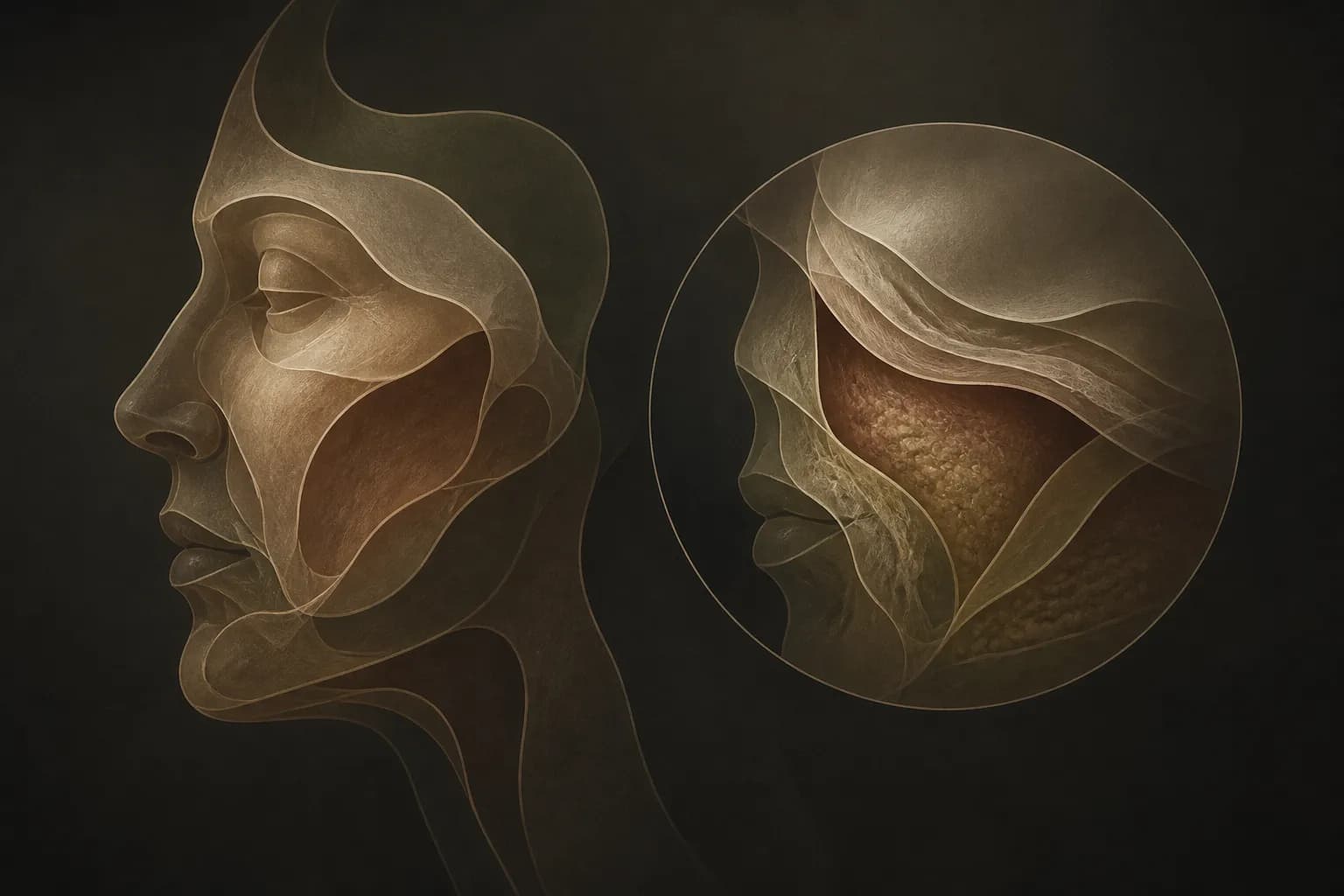
Endoscopic Deep Plane Facelift
Explore the deep plane concept in facelift surgery and its relationship to the endoscopic approach in detail.
Explore the techniqueEndoscopic Brow Lift
Explore how the endoscopic approach is considered in brow and upper facial surgery.
Explore the technique (in Turkish)07 / SURGICAL PLANNING
How is facial rejuvenation surgery planned?
A surgical plan is not based on a single age, face type or standard list of procedures. Age alone does not provide enough information about tissue characteristics or where changes are concentrated.
Examination records facial anatomy, relationships between regions, previous procedures, general health and the individual’s priorities together. Visible findings can then be distinguished under the headings of face, neck, eyelids or brows.
Changes in several regions do not mean that all areas must be included in one plan. Planning aims to define the boundaries of the area to be treated through anatomical findings, rather than to increase the number of procedures.
Previous operations are assessed separately; the doctor states that he also accepts patients for revision surgery. Uncontrolled systemic disease and unrealistic expectations are among the circumstances he considers when postponing surgery or deciding that it is unsuitable.
If non-surgical methods can provide the expected change, these options are considered first. The doctor states that he considers them for early signs of ageing or limited sagging, and may add laser treatments to a surgical plan when needed for separate concerns such as pigmentation.
Combining procedures depends on each region’s needs and medical suitability. The doctor prefers not to perform deep plane facelift surgery and rhinoplasty in the same session because this extends both operating and recovery time.
Facial anatomy
Distribution of ageing changes
Face–neck relationship
Eye area
Brow and upper face
Previous procedures
General health
08 / SURGICAL PROCESS
Assessment and follow-up in facial rejuvenation surgery
Assessment, regional analysis, surgical planning and follow-up are successive stages of the same clinical process. At the first examination, visible changes are assigned to anatomical regions, and the surgical scope is developed from this map.
Follow-up compares the scope of the procedure with current healing findings. Even when several areas are addressed, the process follows the specific surgical plan rather than a general facial rejuvenation timetable.
The medical team manages pain control during and after surgery. Contact the team without delay if unexpected swelling, fever, severe pain, skin changes or trauma develop afterwards.
Initial assessment
The doctor’s preoperative preparation includes standard blood tests and an anaesthesiology assessment. In the framework he has shared, these apply to patients under 40, with an ECG additionally specified for those over 40. The testing plan is finalised through an individual health assessment.
Surgical planning
The regions to be assessed and possible surgical approaches are planned according to individual anatomy. Examining several areas does not mean they will all be included in the same surgical plan; clinical assessment defines its boundaries.
A preparation checklist and preoperative information form are sent approximately two weeks before surgery. This does not mean that all medications must be stopped two weeks beforehand; changes to medicines and other products follow individual instructions.
Follow-up process
The doctor’s general follow-up schedule includes checks and dressing care on postoperative days 1, 2, 3, 5 and 7, followed by reviews at two weeks, one, three and six months, and one year. Procedure-specific schedules also apply, and individual findings may require additional checks.
- Assessment
- Regional analysis
- Surgical plan
- Follow-up
09 / FREQUENTLY ASKED QUESTIONS
Frequently asked questions about facial rejuvenation surgery
What is facial rejuvenation surgery?
Facial rejuvenation surgery is an overarching framework for surgically assessing age-related anatomical changes in the face, neck, eye area and upper face. It is not the name of a single operation.
Which operations can facial rejuvenation surgery include?
This framework includes separate surgical areas such as facelift, neck lift, eyelid surgery and brow lift. Examination determines which area is responsible for a visible change.
Are facelift surgery and facial rejuvenation surgery the same thing?
No. Facelift surgery is a procedure directed at specific facial areas. Facial rejuvenation surgery is a broader concept covering different surgical assessments of the face, neck, eye area and upper face, including facelift surgery.
Are facelift and neck lift surgery assessed together?
Yes. Because the jawline forms an anatomical transition between the lower face and neck, both regions are examined in the same consultation. However, facelift and neck lift surgery are separate procedures that focus on different areas.
Is eyelid surgery part of facial rejuvenation surgery?
Yes. Eyelid surgery is a separate surgical area addressing anatomical changes in the upper and lower eyelids. Its inclusion in the facial rejuvenation framework does not mean that it is added to every facial surgical plan.
Are brow lift and upper eyelid surgery the same procedure?
No. The brow and upper eyelid are different anatomical structures. Brow position can affect the appearance of the upper eyelid, but brow lift and upper eyelid surgery are separate procedures.
What is a deep plane facelift?
Deep plane is one of the anatomical plane concepts used in facelift surgery. The details of this approach and its relationship to the endoscopic method are discussed on the Endoscopic Deep Plane Facelift page.
How is the appropriate facial rejuvenation operation determined?
The surgical area is determined by examining the distribution of changes across the face, neck, eye area and upper face. Facial anatomy, relationships between neighbouring regions, previous procedures and general health are the main inputs to planning.
Contact
Contact the clinic for current appointment and consultation information.
Contact details