AFTER FACELIFT
Scar follow-up after facelift
The appearance of the incision line is one aspect followed after facelift surgery. It can vary between individuals, and one early stage is not considered the final scar result.
By Mehti Şalvız
Published:
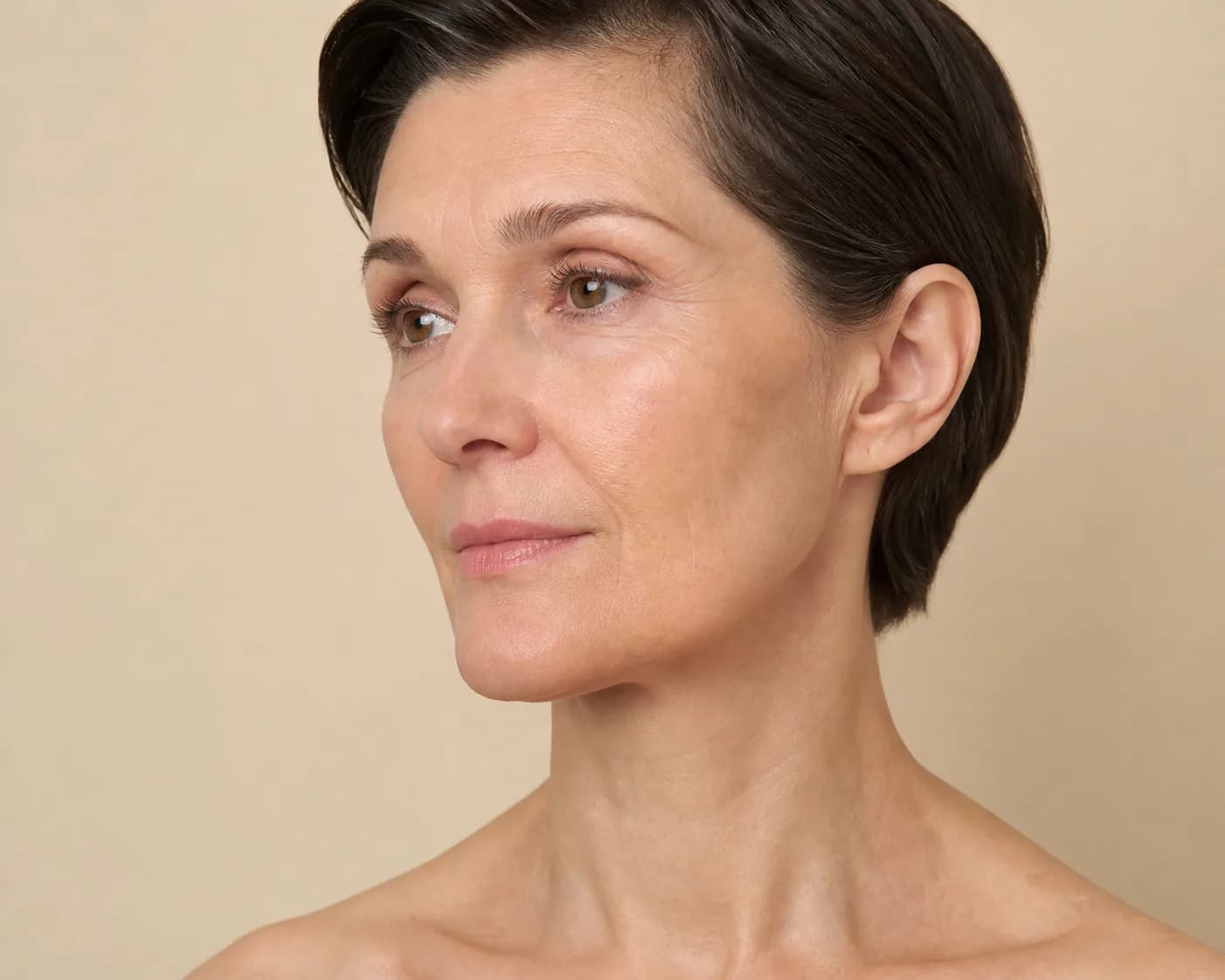
This article distinguishes healing of facelift incisions from scar appearance and covers questions you can ask during follow-up.
How do incision, wound healing and scar differ?
An incision is the line opened during surgery. As it heals, the body forms repair tissue; the scar is the resulting difference in skin appearance and texture. Wound closure and the later development of scar colour, firmness and flexibility are not the same stage.[8][3]
Facelift incisions may involve the hairline and the front and back of the ear; depending on the neck procedure, an additional submental incision may be present. Your surgeon should explain your own incision plan. General options are described on the Facelift Surgery page.[9]
Other procedure topics are available on the Facial Rejuvenation Surgery page.
Assoc. Prof. Mehti Şalvız describes his standard facelift incision as extending from the sideburn level to the front and back of the ear. For endoscopic deep plane, he describes access within the hair at the temple. These incision plans do not have the same scope; being within the hair does not mean no scar will remain.
How can a scar’s appearance change over time?
A new scar may initially be pink or red and slightly raised. Over time it may flatten, approach the surrounding skin colour or remain lighter or darker. Its surface, elevation and firmness matter as well as colour. Initial appearance does not definitively predict later appearance.[4][3]
Fading may be slow; noticeable change can take months and appearance may continue changing for longer. This is general surgical scar information, not a promise that a facelift scar will become invisible by a particular date. The aim is to assess your scar’s changes over time, not promise that no scars remain.[6]
Which characteristics affect appearance?
Wound depth and location, skin colour, age, genetics and wound care may affect scar appearance. Mention any previous raised scars or family history of keloids at consultation. This informs assessment but does not alone predict the scar that will develop.[4][8]
Uncomplicated wound healing also matters. Facelift sources associate smoking with wound healing problems. Share smoking history, current health conditions and medication information with your team; do not make medication changes or preparation decisions on your own.[1][2]
When and how are scar-care decisions made?
Before choosing a scar treatment, examination should assess the wound and scar type. Care for an open wound differs from options for a closed scar. Silicone sheets or gels, for example, may be considered for certain scars; silicone sheeting is considered after wound closure. Timing and product suitability require individual instructions.[5]
Massage is also discussed only once the wound has healed completely. At follow-up, clarify sun protection and when skin products may be started. Treatments such as laser or injections may be considered for some raised or troublesome scars. These are not a routine list for every new facelift scar; the option and timing depend on the problem.[6][5]
What should I discuss at scar follow-up?
Describe the feature that concerns you: colour difference, elevation, firmness, itching or pain. Ask how the scar is expected to change, whether observation alone is sufficient and, if treatment is being considered, its purpose. Discomfort or concern about appearance also deserves assessment.[5][3]
Photographs can help show changes, but do not alone explain firmness on touch, warmth or the course of symptoms. Share your observations alongside photographs. General facial swelling and return to activities are covered separately in the Recovery after facelift surgery guide.[7][5]
Existing information about swelling is also available in Oedema and swelling after facelift .
The doctor uses absorbable facelift sutures, preferring to remove them in patients able to attend around day 10. He expects sutures left in place to dissolve in approximately three weeks. Suture removal or dissolution does not mean scar maturation is complete.
Which changes should prompt assessment?
Warmth, swelling, increasing pain, pus, wound opening or fever around a scar or wound should not be left waiting as merely maturation of appearance. Seek prompt assessment from the surgical team or an accessible healthcare facility. Instead of diagnosing the scar type yourself, describe when the change began and how it has progressed.[7][6]
Seek emergency medical help for shortness of breath or chest pain. Sending a photograph and waiting for a reply or a routine appointment is not appropriate in that situation.[1]
Sources
- BAAPS and BAPRAS. Facelift and Necklift
Full patient information text; general information about face and neck lift surgery.
- American Society of Plastic Surgeons (ASPS). Facelift Preparation
Full patient information text; preparation and support planning before surgery.
- American Academy of Dermatology (AAD). Scars: Overview
Full patient information text; general scar information, not facelift-specific outcome rates.
- American Academy of Dermatology (AAD). Scars: Signs and symptoms
Full patient information text; general scar types and appearance.
- American Academy of Dermatology (AAD). Scars: Diagnosis and treatment
Full patient information text; treatments mainly concern raised scars and keloids. Does not recommend routine treatment for every new facelift scar.
- NHS. Scars — Source text last reviewed: 18 September 2023
Full patient information text; general scar care. Specifies complete wound healing before massage.
- Guy’s and St Thomas’ NHS Foundation Trust. Surgical wounds and preventing infections — Overview — Source page last reviewed: May 2025
Full patient information text; general surgical wound information, not facelift-specific frequencies or timelines.
- American Academy of Dermatology (AAD). Scars: Who gets and causes
Full patient information text; general causes of scars and predisposition.
- American Society of Plastic Surgeons (ASPS). Facelift Procedure Steps
Full patient information text; general incision options, not an individual incision map.
This content provides general information and does not replace individual medical assessment.