AFTER AN ENDOSCOPIC BROW LIFT
Recovery After an Endoscopic Brow Lift
Recovery after an endoscopic brow lift involves assessing early changes around the forehead and brow, oedema and the adaptation of upper facial tissues over time together.
By Mehti Şalvız
Published:
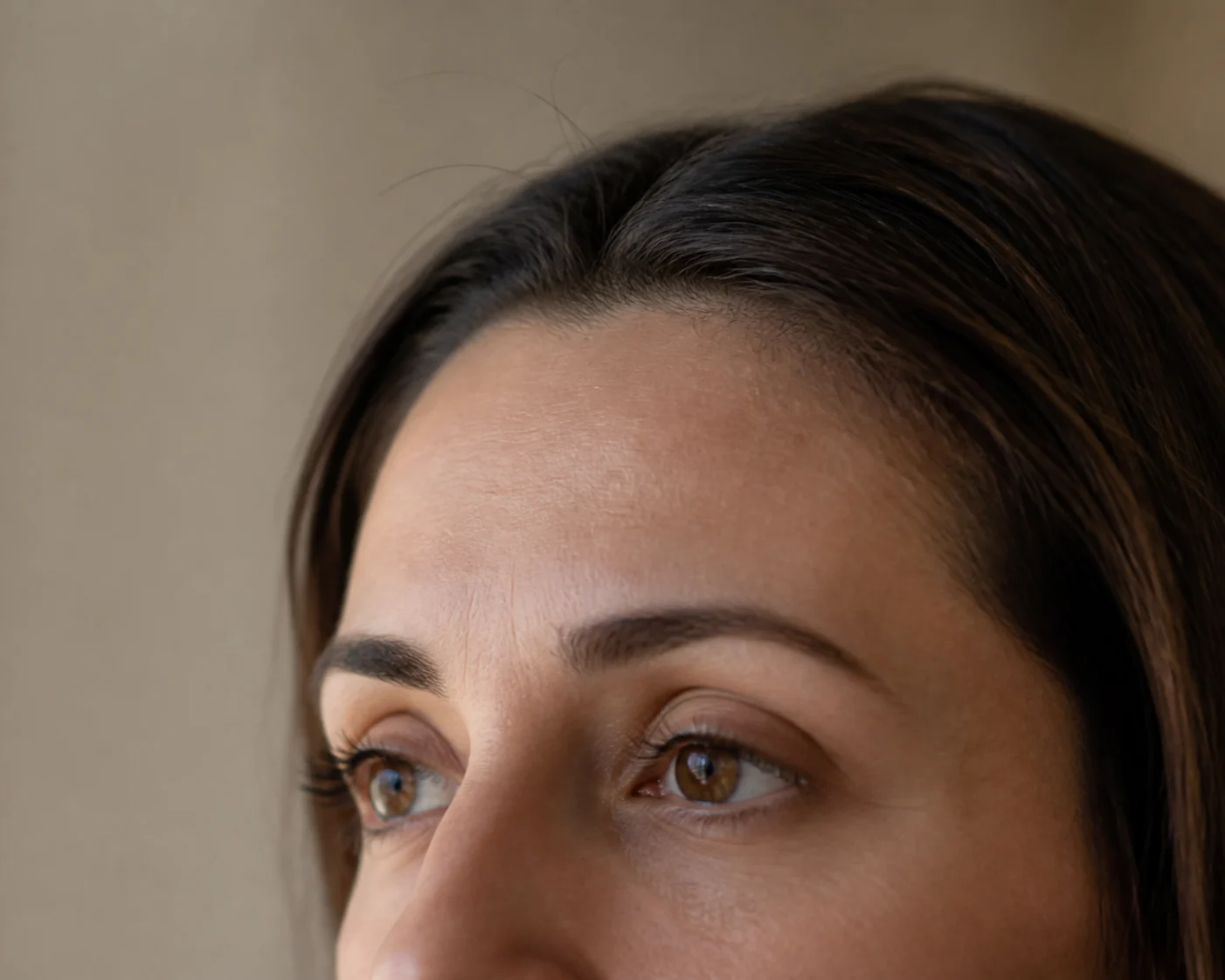
Returning to everyday life and assessing results are different stages after an endoscopic brow lift. Assoc. Prof. Dr Mehti Şalvız's current care and follow-up plan considers a return to general daily life at approximately one week and assessment of results at approximately 3–4 months. These intervals are interpreted according to individual follow-up findings; they do not automatically give permission for exercise, physical work or driving.
Swelling, bruising and tenderness may occur around the forehead, brows and eyes in the early period. The reduction in oedema, healing of the incision line and assessment of brow appearance are not completed at the same time. The appearance in the first days is not considered the final result.
This article addresses bandage and drain care, return to activities, the follow-up plan and changes that should be reported promptly to the team as separate topics. Follow the individual instructions given by your surgical team.
Why Is Endoscopic Brow Lift Recovery Different for Everyone?
Original upper facial anatomy is an important factor in the individual appearance of recovery. Forehead height, brow shape and position, temple characteristics, skin thickness and soft tissue distribution differ between people. A procedure described under the same name may also have a different scope for each person. These characteristics can affect where oedema is more visible early on and how the brow area is perceived.
Individual healing responses, previous upper facial or eye area procedures and tissue characteristics observed during follow-up are also considered. Age alone does not determine how recovery progresses. Even people of similar age or with similar brow appearances do not necessarily experience the same pattern of change around the forehead and upper eyes.
The anatomical context of brow position independently of surgery is explained in What Causes Brow Drooping? article.
The name ‘endoscopic’ does not, by itself, define a standard recovery speed or appearance. Assessment relies on the individual's surgical scope, tissue characteristics and changes observed at follow-up, rather than general assumptions attributed to the method. Recovery is therefore considered in relation to the person's own initial findings and progress over time, rather than other people's photographs.
What Early Changes May Occur Around the Forehead and Brows?
The early period is the stage when tissues around the forehead and brows begin healing and appearance can vary. Swelling, oedema, bruising or tenderness are among the general changes that may occur. Their extent, where they are more prominent and their distribution between the sides are not the same for everyone; a single appearance does not represent the whole process.
The surgeon states that he may observe folds around the scalp incision line and swelling around the eyes in the early period. Weakness in brow movement or altered scalp sensation should be reported to the team rather than automatically considered normal.
Swelling and oedema
Swelling and oedema may be visible components of the early response of surgically addressed tissues. Although the forehead, brow area, temples and eye area are adjacent, they do not have to be affected equally. Fullness that is more prominent in one region may be limited in another; the sides may not look completely identical at every stage.
Oedema does not have a fixed form. As its distribution changes, the brow boundary, transition between forehead and brow, and openness of the upper eye area may be perceived differently. Early fullness or differences in position are therefore not used alone to judge results. Changes are considered in the context of original anatomy and follow-up findings.
Bruising and tissue tenderness
Bruising and tissue tenderness may occur in some people; their visibility and how they feel are not the same. Skin characteristics, the scope of the procedure and individual tissue responses may affect how these changes are perceived. Sensations around the forehead, temples and brows may also differ at different stages of recovery.
The surgeon states that, particularly in people with migraine-type headaches, he may observe moderate pain and nausea related to forehead tightness on the first night. He notes that these may lessen the following day; this observation does not mean that all pain can be left to wait or will resolve within the same time.
Early Appearance of Brow Position
Early brow position may be affected by oedema, soft tissue healing and changes around the forehead and temples. The inner, middle and outer brow are not assessed as a single line. Because different areas of upper facial tissue may not reach a settled appearance at the same time, brow shape may be perceived differently throughout recovery.
The initial appearance is therefore not interpreted as the final result. Facial expression, direction of gaze, the state of the forehead muscles at that moment, lighting and camera angle can make brow position look different. Assessment relies on change over time and clinical follow-up findings, rather than a single view in the mirror; definitive conclusions are not drawn from the early appearance.
How Are Oedema and Swelling Assessed Over Time?
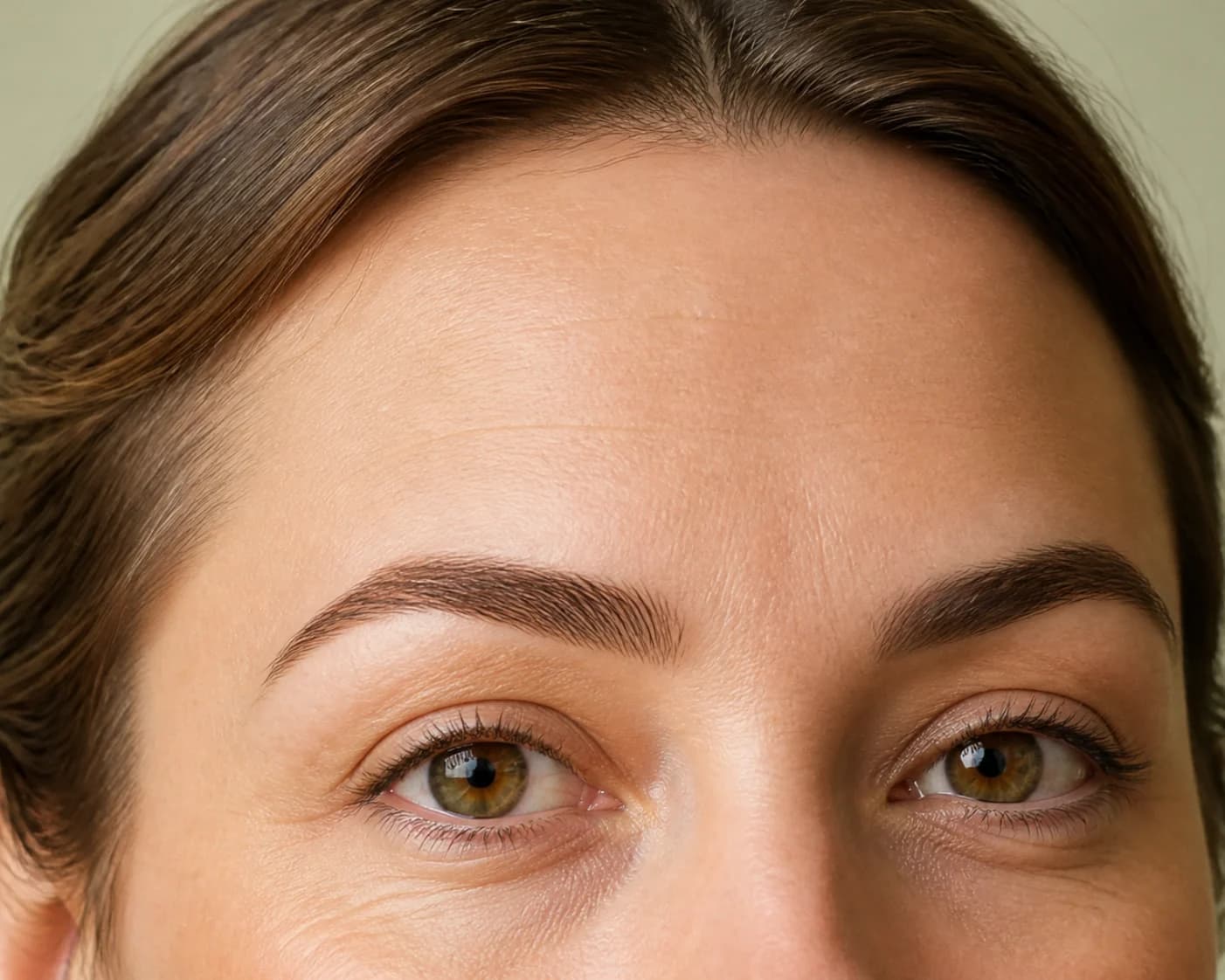
Oedema and swelling are not fixed findings that look the same throughout recovery. As their distribution around the forehead, brow, temple and eyes changes, different upper facial regions may be perceived differently. One area's appearance need not change at the same rate as another's, so the whole process is not judged by looking at only one point.
When assessing a mirror image or photograph, the direction of light, head position, facial expression and camera angle can affect shadows around the brows. The same person may appear to have a different brow height or upper eyelid opening when these conditions change. A more meaningful assessment considers appearance under similar conditions where possible, together with examination findings over time.
A change in the appearance of swelling does not, by itself, show that healing is complete or that brow position is final. A change noticed by the person is interpreted at follow-up within the scope of their own surgery. Individual recovery is therefore the reference, rather than general internet examples or a single photograph.
What Does Adaptation of Forehead and Brow Tissues Mean?
Tissue adaptation describes changes in the operated forehead and brow area during healing. Even after returning to everyday life, swelling may continue to subside and incision scars may continue to mature. A reduction in visible oedema alone therefore does not indicate that all healing is complete.[2]
In the surgeon's practice, absorbable sutures and a bandage for two days are used; some patients have a drain that remains overnight. Bandage or drain care and removal follow the team's plan.
At discharge, clarify bandage care and drain care if applicable, which changes should be reported to the team, and the timing of your next appointment. Do not remove a bandage or drain yourself according to a general internet timeline.
The anatomical aspects used to assess the surgical approach are explained on the Endoscopic Brow Lift page.
Why May Brow and Upper Eyelid Appearance Be Assessed Together During Recovery?
The brow and upper eyelid are different anatomical structures; the appearance of one is not treated as the structure of the other. Nevertheless, brow position can influence the perceived area visible on the upper eyelid and the distance between brow and eyelid. As oedema in the forehead, brow and surrounding tissues changes during healing, the visual relationship between these regions may also be perceived differently.
The fundamental distinction between the two surgical areas is discussed in detail in The Difference Between Brow Lift and Upper Eyelid Surgery. Changes in upper facial tissues during recovery may temporarily affect upper eyelid appearance as well as the brow.
The upper eyelid's own surgical assessment is covered on the Upper Eyelid Surgery page. Assessing the upper eye area during follow-up after a brow lift does not mean that an additional upper eyelid procedure was performed or that the same approach is needed for everyone. The structures are kept distinct, without overlooking their visual relationship.
Why Does Returning to Daily Activities Vary Between Individuals?
The surgeon generally anticipates a return to everyday life after approximately one week. Desk work, physical work, social activities, exercise and driving have different requirements; this interval does not automatically permit every activity.
General brow lift resources treat initial wound healing and changes in swelling and scars over time as separate stages. The term ‘endoscopic’ also does not provide an individual return date. Discuss the physical demands of your work and the activity you wish to undertake with your surgeon during follow-up.[2]
Being able to work at a desk is not the same as being ready for heavy lifting or exercise. Return to activities depends on follow-up findings and restrictions given by the surgical team; another patient's timeline does not replace your own plan.
Why Is Follow-up After Surgery Important?
Follow-up helps ensure that recovery is not interpreted solely from external appearance. Brow position, the forehead, the visual relationship with the upper eyelid and surrounding upper facial tissues are considered together. This anatomical relationship is monitored within the individual's course of recovery.
The person's observations and questions are an important part of follow-up. How the brows are perceived during different expressions, changes around the upper eyes and the nature of daily activities provide individual context. Considering this information together with examination findings allows a broader assessment than the impression created by one photograph.
The surgeon's follow-up plan includes appointments at week 1, month 1 and month 3 or 4. Contact the team without waiting for a scheduled appointment if new or increasing swelling, fever, severe pain or skin changes develop.
Brow surgery can involve bleeding, infection, wound and scar problems, hair loss, altered sensation or nerve problems affecting facial movement. Do not automatically consider new loss of movement or altered sensation normal; inform the surgical team.[1]
When Are Endoscopic Brow Lift Results Assessed?
Endoscopic brow lift results are not assessed from the first early appearance. Oedema, tissue tenderness and healing around the forehead and brows may affect brow position and the upper eye area. The initial impression after surgery therefore does not definitively represent the appearance that may emerge as healing progresses.[3]
The surgeon uses approximately 3–4 months as the timeframe for assessing results. This period is interpreted alongside individual healing and follow-up findings. Definitive results or duration cannot be inferred from the early appearance.
The general framework for surgical assessment of brow position is explained on the Brow Lift Surgery page.
Early brow and upper facial appearance after an endoscopic brow lift is not assessed as the final result because oedema and tissue healing are still ongoing.
Sources
- American Society of Plastic Surgeons. Brow Lift Risks and Safety
Accessed on 6 September 2026. Used for the general risk framework.
- American Society of Plastic Surgeons. Brow Lift Recovery
Accessed on 16 October 2026. General care and recovery stages after a brow lift. Not used as the source for the surgeon's individual follow-up schedule.
- American Society of Plastic Surgeons. Brow Lift Results
Accessed on 16 October 2026. The distinction between early appearance and results assessed over the following months.
This content provides general information and does not replace individual medical assessment.