BROWS AND UPPER EYELIDS
The Difference Between Brow Lift and Upper Eyelid Surgery
Although brow lift and upper eyelid surgery are assessed within the same upper facial region, they address different anatomical structures. Brow position can affect the appearance of the upper eyelid, but the brow and eyelid are not the same structure.
By Mehti Şalvız
Published:
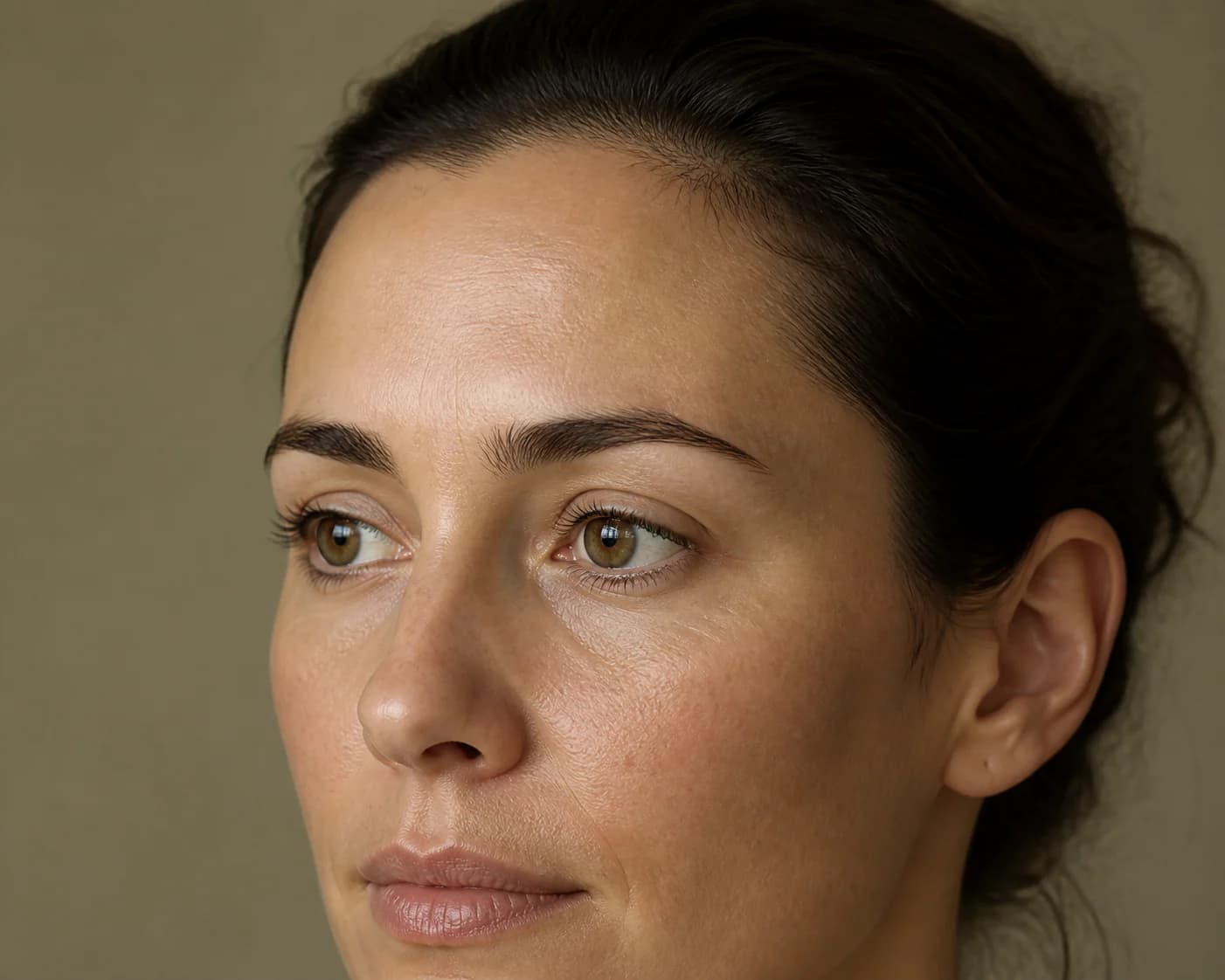
A brow lift and upper eyelid surgery are not the same procedure. Brow lift assessment considers brow position and its relationship with the forehead and upper face. Upper eyelid surgery focuses on the upper eyelid's own skin, soft tissues and surrounding anatomy. The two surgical areas are adjacent, but they do not address the same structure.
The brow's position on the face can affect the area between the brow and eyelid crease and the amount of tissue visible on the upper eyelid. A lower brow may therefore create an appearance that seems to arise from the eyelid. Conversely, changes in upper eyelid tissues may be more prominent while brow position is maintained.
It is not always possible to distinguish whether an effect originates from the brow or eyelid by looking in a mirror or at a single photograph. Assessment examines the brow, forehead, temple and upper eyelid together, then identifies which anatomical region contributes more to the appearance. This distinction helps explain the procedures in terms of the areas they address, rather than which is superior.
Are Brow Lift and Upper Eyelid Surgery the Same Procedure?
No. Although brow lift and upper eyelid surgery are considered in neighbouring upper facial regions, they address different anatomical structures. Brow lift assessment considers the brow's position on the face, its relationship with the forehead and the overall appearance of the upper face. Upper eyelid surgery examines the eyelid's own skin, soft tissues and relationship with surrounding structures.
The proximity of these two areas can make it difficult to distinguish the source of a visible change. A lower brow may narrow the space between the brow and eyelid crease and create the impression of more tissue on the upper eyelid. Conversely, changes in upper eyelid tissues may affect the eye area's appearance while the brow remains in its natural position. A similar external appearance does not necessarily have the same anatomical cause in different people.
The central question in this comparison is therefore which region contributes to the appearance, rather than which procedure offers more advantages. A brow-related change is not explained solely through the eyelid, nor an eyelid-related change solely through the brow. Assessment aims to understand each region's relationship within the upper face while recognising its separate anatomy; procedure selection is not based only on procedure names or a single detail in a photograph.
Which Area Is Assessed for Brow Lift Surgery?
Brow lift assessment is not limited to the line formed by brow hairs. The brow's position between the forehead, temple and upper eyelid may be examined along with its appearance at rest and during facial expression. The aim is not to define a fixed brow height, but to understand the brow's relationship with surrounding tissues within the individual's upper facial anatomy.
Brow Position
The brow is not a single straight line. Its inner part near the bridge of the nose, middle part above the eye and outer or lateral part extending towards the temple do not have to share the same height or slope. Assessment may consider their positions on the face, their balance and natural differences between the two sides.
In some people, the outer brow's appearance is more noticeable; in others, the relationship between the middle brow and upper eyelid is more prominent. There is no universal ideal ratio for this. The original brow shape, forehead height, eye area anatomy and changes noticed over time are considered together. A naturally lower brow does not in itself mean that surgery is needed.
Relationship with the Forehead and Upper Face
The brow lies at the lower boundary of the forehead tissues, next to the temple area. Its appearance is therefore not independent of forehead height, the upper facial tissues at rest and the transition between the outer brow and temple. Temporary brow movement during forehead activity also makes it necessary to distinguish resting appearance from appearance during expression.
The surgical scope of this anatomical framework is explained on the Brow Lift Surgery page. The area to be addressed is determined according to the individual's anatomical characteristics.
Which Area Is Assessed for Upper Eyelid Surgery?
Upper eyelid surgery assesses the eyelid's own anatomy. The upper eyelid is a region that moves during blinking and facial expression, and whose appearance involves skin, soft tissues and surrounding structures. Because it lies immediately below the brow, brow position can visually affect it, but this proximity does not make the eyelid and brow the same structure.
Upper Eyelid Skin and Soft Tissues
Upper eyelid skin is a thin, mobile surface. Its amount, texture and distribution over the eyelid, together with surrounding soft tissues, can contribute to the overall eyelid appearance. Skin appearance may be more prominent in one person, while the overall relationship of the space between the eyelid and brow may be more noticeable in another.
It may not be sufficient to attribute this appearance only to brow position. Changes in upper eyelid skin or soft tissues may occur while the brow is in its natural position. Conversely, a lower brow may increase the tissue visible on the upper eyelid while the eyelid's own tissues show limited change. These possibilities require separate examination of the eyelid's own anatomy and the adjacent brow region.
The Eyelid Crease and Surrounding Anatomy
The eyelid crease is one component of the upper eyelid's visible form. Its visibility may be related to eyelid skin and soft tissues, the space between brow and eyelid, and the original anatomy of the eye area. A single crease shape is therefore not used as a normal or ideal standard.
Assessment specific to upper eyelid surgery is covered on the Upper Eyelid Surgery page. Brow position is not completely independent of this assessment, but it is not an explanation that replaces the eyelid's own tissues. The brow, eyelid crease and surrounding anatomy are observed together while recognising each region's separate structure.
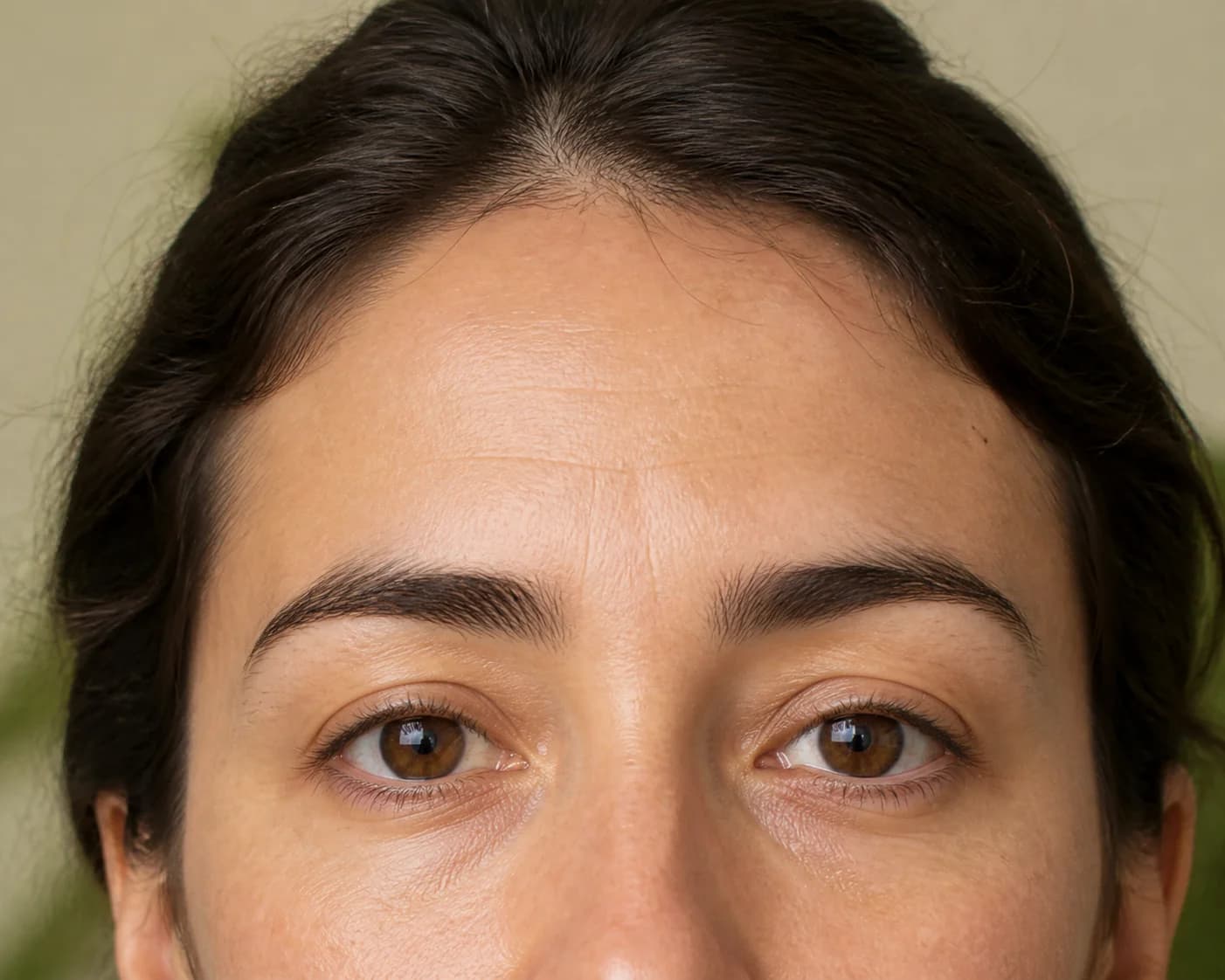
How Can Brow Position Affect Upper Eyelid Appearance?
Brow position affects the upper boundary of the area visible on the upper eyelid. When the brow appears lower, the distance between the brow and eyelid crease may look narrower and tissues in this area may appear more prominent over the upper eyelid. Because the inner, middle and outer brow are not in the same position, this effect does not have to look equal across the eyelid.
However, brow position does not remove the upper eyelid's own anatomy from consideration. Upper eyelid skin, soft tissues and the eyelid crease each contribute separately to appearance. Brow position may have a greater influence in some people, the eyelid's own tissues in others, and the relationship between both regions in others. Anatomical contributions can be distributed differently in two apparently similar appearances.
This relationship does not mean that a procedure addressing the brow will correct every aspect of upper eyelid appearance. Equally, focusing only on the eyelid may not explain the influence of the brow–forehead relationship. Clinical assessment aims to distinguish where a visible change originates, rather than assuming a solution from the name of a procedure.
Are Brow Drooping and Upper Eyelid Sagging the Same?
They are not the same. In everyday language, brow drooping describes a brow position that appears lower on the upper face. Changes in upper eyelid tissues relate to the eyelid's own skin, soft tissues and surrounding anatomy. Their visual effects can be confused because the regions are close together, but their anatomical origins are different.
A lower brow may increase the amount of tissue visible on the upper eyelid, and this appearance may seem to come from the eyelid tissues. Conversely, changes in upper eyelid skin or surrounding tissues may be prominent while brow position is maintained. Upper eyelid appearance can have different anatomical causes and requires clinical assessment. Separate clinical conditions involving true eyelid ptosis are outside the scope of this comparison.
The article What Causes Brow Drooping? provides further context about changes in brow position and their relationship with upper facial anatomy. The article Differences Between Upper and Lower Eyelid Surgery focuses on anatomical differences between the upper and lower eyelids and why they are assessed separately.
Can Brow Lift and Upper Eyelid Surgery Be Assessed Together?
Yes. Because the brow and upper eyelid are neighbouring parts of the same upper facial appearance, they can be examined together during assessment. While observing the brow's resting position and relationship with the forehead and temple, upper eyelid skin, soft tissues and the eyelid crease can be considered separately. Examining them together helps explain each region's contribution without confusing the two.
However, assessing both regions together does not mean that both procedures will necessarily be performed together. Brow position may contribute more to appearance in some people, while the upper eyelid's own anatomy may be more prominent in others. Although both areas can contribute, this is not a rule that everyone requires combined procedures.
A surgical plan is not determined from a single photograph, a person's age or someone else's procedure. Individual anatomy, examination findings, previous procedures and general health are considered together. The aim is not to choose automatically between two procedures, but to identify which anatomical area may be considered for treatment.
Assoc. Prof. Dr Mehti Şalvız considers a brow lift or planning both regions together when upper eyelid hooding originates from brow drooping. Raising the brow to compensate for the eyelid can make its resting position appear higher than it actually is; this distinction is addressed during examination.
How Is the Area for Surgical Assessment Determined?
Assessment may begin with the brow's current position and the appearance of its inner, middle and outer parts. Forehead height, the transition between the temple and outer brow, and changes between rest and expression contribute to this framework. Upper eyelid skin and soft tissue appearance, the eyelid crease and relationships with surrounding structures are examined separately.
Assessment also includes how a person describes the appearance that concerns them, when they noticed the change, previous procedures and general health. Simply lifting the brow by hand, looking at one image or drawing conclusions from age is not sufficient to determine which area should be addressed. Examination aims to understand the anatomical source of the appearance and how the regions contribute to one another.
The general surgical framework for the brow and forehead is covered on the Brow Lift Surgery page. For the upper eyelid's own anatomical scope, the Upper Eyelid Surgery page provides relevant information. These two links do not imply that the procedures will be performed together.
The broader surgical area covering the upper and lower eyelids is explained on the Eyelid Surgery page. Before considering procedure names, the region for surgical assessment is determined from individual anatomical findings, expectations and health.
Difficulty closing the eyes after previous upper eyelid surgery is one of the limitations the surgeon specifically considers when planning a brow lift. This history should be discussed at consultation separately from changes in appearance.
The brow and upper eyelid are different anatomical structures; individual assessment determines which region contributes more to appearance.
This content provides general information and does not replace individual medical assessment.