DEEP PLANE
Deep Plane and Other Facelift Approaches: The Differences
Deep plane is a concept relating to the anatomical plane in facelift surgery. Its distinction from other facelift approaches concerns which anatomical layers are assessed and how they are addressed in surgical planning.
By Mehti Şalvız
Published:
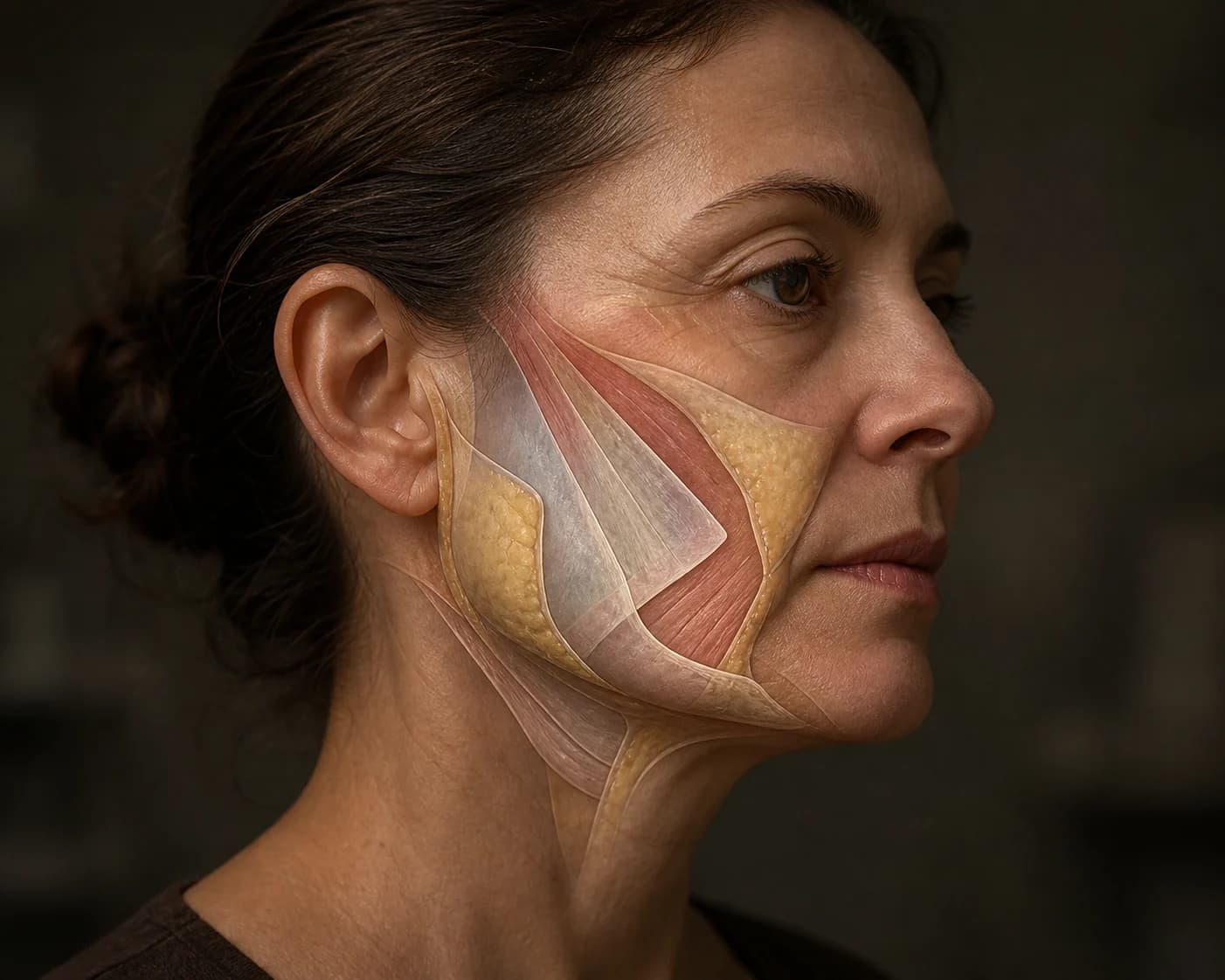
The main difference between deep plane and other facelift approaches concerns the layer in which tissues are mobilised and how this is done. The deep plane approach works beneath the superficial muscle and connective tissue layer called the SMAS. Endoscopic describes visualisation of the operating area using a camera, rather than this tissue plane.
“Traditional facelift” is not the name of a single technique. A facelift performed through incisions around the ear can also involve a deep plane approach. When comparing methods, incision location, the tissue layer addressed and whether excess skin will be removed should therefore be discussed separately.
Suitability depends on excess skin, the distribution of sagging in the face and neck, and individual examination findings. The name of a method alone does not guarantee faster recovery, longer-lasting effects or a better result.
Why are there different approaches to facelift surgery?
The midface, lower face, cheeks, jawline and neck are adjacent areas with different anatomical characteristics. Age-related changes do not concentrate in the same region or tissue layer in everyone. Midface contour may be the main consideration in one person, while the lower face–neck transition may matter more in another.
Because of this variation, Facelift Surgery should not be regarded as one standard technique. Surgical access, the anatomical structures addressed and the plane used may differ according to the plan. Whether face and neck are assessed together or separately, the contribution of surrounding areas and previous procedures can also shape the approach.
The existence of different approaches does not mean they can be ranked simply as good or bad. Each has meaning within a particular anatomical assessment and surgical plan. Comparison therefore requires understanding which regions and structures are addressed and why, rather than only the technique name. Operative details are matters for individual examination and surgical planning.
Technique names provide a shared language but do not describe the entire plan. Two plans using the same general term may differ in their regional scope or assessment of the face–neck relationship. A useful comparison therefore explains the anatomical context in which the terms are used, rather than merely placing names alongside one another.
What does deep plane mean?
Deep plane means a deeper anatomical plane. In facelift surgery, it describes the working plane beneath the SMAS. The approach involves releasing attachments holding tissues in place and mobilising the skin together with associated deeper tissues. Hamra’s original technical description explains this anatomical approach; the scope and details of current applications are not all identical.[1]
Its place in facial anatomy and its relationship with endoscopic access are explained on the Endoscopic Deep Plane Facelift page.
The surgical plane and incision location are separate pieces of information. “Deep plane” alone does not specify where incisions will be, whether the neck will be addressed or whether excess skin will be removed. These are aspects of the individual surgical plan that need separate explanation.
What is the main difference between deep plane and other facelift approaches?
The distinction cannot be explained by a single operative step. It involves the surgical plane, the anatomical structures assessed and how these are related within an individual plan. These three aspects are not entirely independent; together they frame the surgical approach.
“Deep plane” is an anatomical surgical concept in facelift surgery, not a statement of superiority.
Surgical plane
The surgical plane describes the level between facial anatomical layers at which surgery is planned. Its relationship with this plane is a defining feature of the deep plane approach. Other facelift plans may address tissues, access and relationships between layers differently.
However, the plane’s name alone cannot establish quality or outcome. “Deep” describes anatomical position; it does not mean the method suits everyone or is superior to other plans. The surgical plane is considered together with the facial areas assessed and the person’s existing anatomy.
Anatomical structures assessed
Facial appearance is not formed only by the skin surface or one soft tissue area. Skin, regional volume distribution, supporting structures and neighbouring anatomical areas all contribute to contour. Facelift approaches may differ in which of these structures they address and how their relationships are managed.
Before comparing methods, it helps to understand which facial layers may show age-related changes. The What causes facial sagging? article explains the combined influence of skin, soft tissues and deeper structures on appearance.
Surgical planning
Surgical planning does not mean choosing a method name in advance and applying it identically to every face. The distribution of changes in the midface, lower face, jawline, neck and, when necessary, surrounding areas is examined. The approach is considered after identifying which anatomical relationships affect the appearance.
The difference between deep plane and other approaches therefore lies not only in terminology, but in how the plan matches individual facial structure. Similar-looking changes can involve different anatomical relationships in two people. The approach is considered following examination and clinical assessment, rather than based on age or a single internet definition.
Can “deep plane” and “traditional facelift” be compared directly?
In everyday use, “traditional facelift” can refer to different operations. A traditional facelift incision may begin in the hair-bearing scalp and continue around the ear; underlying tissues are repositioned and excess skin may be removed. This does not mean the whole procedure consists only of tightening skin.[2]
A comparison should first clarify which two approaches are meant. How deeper tissues are addressed, where the incision lies and how excess skin is managed are separate questions. A plan using an incision in front of the ear can also be a deep plane procedure.
At consultation, “Which areas will be addressed?”, “Which tissue plane will be used?” and “How will excess skin be managed?” are more informative than comparing technique names alone. Recovery, risks and expected changes should also be discussed in relation to that individual plan.
Are endoscopic access and deep plane the same thing?
Deep plane describes the surgical plane; endoscopic access describes visualising the surgical area with a camera. They do not mean the same thing, but may be used together in one operation.
In Assoc. Prof. Mehti Şalvız’s case explanation on this site, the endoscopic approach through incisions within the hair and the deep plane beneath the SMAS are explained together. The discussion covers the lower face, temples and, when needed, forehead as well as the midface. This scope does not mean every patient will undergo the same procedures.[3]
You can explore incision locations, tissue-retaining ligaments and the influence of excess skin on method selection on the Endoscopic Deep Plane Facelift: Video and Case Study page, with the doctor’s explanation and drawings taken from the video.
Is deep plane suitable for everyone?
No. A single facelift approach cannot automatically be considered suitable for everyone. This comparison explains conceptual differences between methods; it does not determine individual suitability or candidacy.
Method selection is considered in the context of facial anatomy and surgical assessment. The framework for suitability is explored further in Who May Be Assessed for a Deep Plane Facelift? . Comparing techniques does not establish whether an approach is suitable for a particular person.
How is the facelift approach to assess determined?
A surgical approach is considered through comprehensive facial assessment, rather than selecting a familiar internet technique name beforehand. The relationship between the midface, cheeks, lower face, jawline, area beneath the chin and neck may be examined. When necessary, neighbouring regions such as the eye area and upper face may also be assessed for their contribution to overall appearance.
Assoc. Prof. Mehti Şalvız uses a deep plane approach in plans requiring an incision in front of the ear and addressing face, jawline and neck sagging. He considers endoscopic deep plane when the midface predominates without pronounced jawline or neck sagging and substantial skin removal is not required. SMAS excision, plication and mini facelifts are not among his practices.
The general framework for assessing different regions together is explained on the Facial Rejuvenation Surgery page; the surgical scope concerning the midface, lower face and jawline is covered on the Facelift Surgery page. These resources do not automate technique selection; they help explain the place of surgical terms within individual anatomical assessment.
Sources
- Hamra ST. The deep-plane rhytidectomy — 1990
Accessed on 16 October 2026. Original technical description of the anatomical plane; not used to claim superiority or an individual outcome.
- American Society of Plastic Surgeons. Facelift Procedure Steps
Accessed on 16 October 2026. General information about incisions, underlying tissues and management of excess skin.
- Mehti Şalvız. Endoscopic Deep Plane Facelift Explained | Surgical Technique & Patient Case — 2026-10-12
Doctor’s explanation featured on this site: 00:00 scope, 01:00 incisions and deep plane, 04:27 patient selection. This is a single case explanation.
This content provides general information and does not replace individual medical assessment.